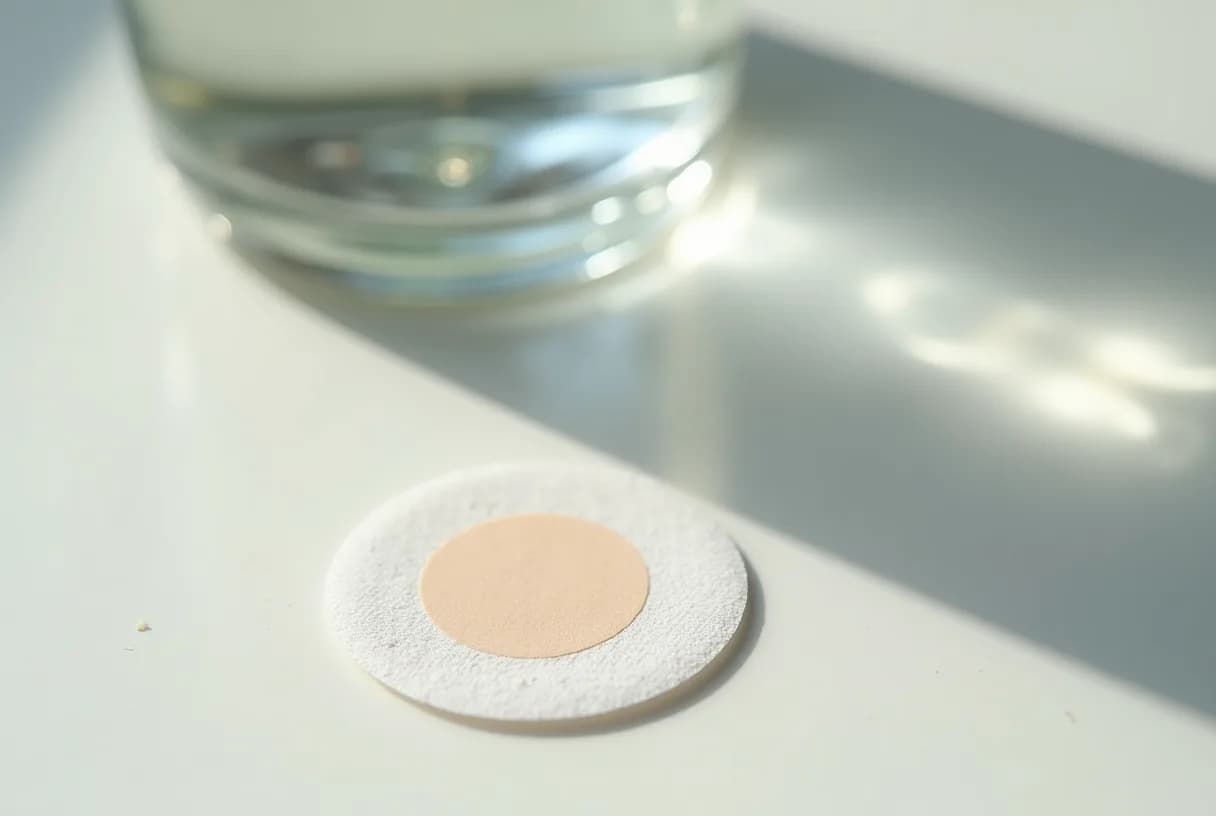
No — weight-loss patches do not work, and there is no FDA-approved skin patch for weight loss, appetite, or fat burning of any kind. Every product marketed as a "slimming," "fat-burning," "detox," or "GLP-1" patch is either an unregulated supplement or cosmetic making drug-like claims with no supporting evidence, or an outright scam claiming to deliver a peptide that physically cannot pass through intact skin. The only genuinely medicated skin patch relevant to this conversation is nicotine — and that is approved for quitting smoking, not for losing weight.
If you've felt the pull of these products, that's not naivety — it's the marketing working as designed. Wanting an easier, less invasive route than injections or daily discipline is completely reasonable, and the frustration behind that wish is real. This article gives you the honest science so you can stop wasting money on patches, and points you toward the things that genuinely move the needle.
What is actually being sold as a "weight loss patch"?
The category is a grab-bag of unrelated products that share only an adhesive backing and a bold promise:
- Herbal "slimming" patches — containing extracts like green tea, garcinia, guarana, capsaicin, or seaweed, claiming to "boost metabolism" or "burn fat while you sleep."
- "Detox" and belly patches — often wormwood or "bamboo vinegar" foot or navel patches that turn dark overnight (from moisture and the ingredients oxidizing, not from "toxins" leaving your body).
- Acupressure or "ear seed" style patches — marketed as appetite-suppressing.
- "GLP-1 patches" and "semaglutide patches" — the newest and most misleading wave, borrowing the name of prescription drugs like Ozempic and Wegovy to imply the same results.
None of these has been shown in a randomized human trial to cause meaningful weight loss. What they share is a business model, not a mechanism.
Do slimming, fat-burning, and detox patches work?
No. There is no credible evidence that any topically applied herb "melts fat" or meaningfully raises metabolism. The ingredients themselves are the problem twice over. First, most have little or no weight-loss evidence even when swallowed in a pill; sprinkling them on your skin does not improve on that. Second, your skin is a barrier built to keep things out. The widely cited "500 Dalton rule" in dermatology holds that molecules heavier than about 500 daltons generally cannot passively cross the outermost skin layer (the stratum corneum). That is why every real transdermal patch on the market — nicotine, hormones, some pain and motion-sickness drugs — uses only small molecules.
"Detox" patches deserve a specific correction: your liver and kidneys handle detoxification, and there is no toxin a foot pad can pull out through your sole. The dark residue is a chemical reaction, marketed as proof. For a fuller look at the "boost your own GLP-1 naturally" version of this pitch, see our honest review of so-called natural Ozempic.
Can a "semaglutide patch" really deliver the drug through your skin?
This is the claim that fools the most people, because it sounds specific and scientific. It isn't. GLP-1 medications like semaglutide are large peptide molecules — semaglutide weighs roughly 4,100 daltons, about eight times the 500-dalton skin-penetration threshold and roughly 25 times the size of nicotine. A peptide that big simply cannot diffuse through intact skin from an adhesive patch. Experimental research into GLP-1 patches exists, but it relies on microneedle arrays that physically pierce the skin barrier, and as of 2026 no such patch has completed late-stage trials or earned FDA approval. We cover that emerging science in depth in do GLP-1 patches work?
So a product sold on social media as a "GLP-1 patch" is one of two things: it contains no actual GLP-1 drug (just herbs or amino acids, riding on the name), or it claims to contain a peptide that its own delivery method makes biologically inert. Either way, you are not getting an Ozempic-like effect. The same physics limits most "peptide patches" — see peptides for weight loss.
| Product type | The claim | What the evidence shows |
|---|---|---|
| Herbal "slimming" / fat-burning patch | "Boosts metabolism," "burns fat while you sleep" | No randomized human evidence of weight loss; ingredients unproven even orally |
| "Detox" foot or belly patch | "Draws out toxins," reduces bloating and fat | No detox effect; dark residue is oxidation, not toxins. Liver and kidneys do detox |
| "GLP-1" / "semaglutide" patch | "As good as Ozempic, no needles" | Peptide is far too large (~4,100 Da) to cross intact skin; no FDA-approved GLP-1 patch exists |
| Nicotine patch (for comparison) | Approved smoking-cessation aid | Genuinely transdermal (small molecule), but not a weight-loss product and not to be used for that |
If they don't work, how are they even sold?
Because most are marketed as "dietary supplements" or "cosmetics," not drugs. Supplements do not need FDA approval before sale, and the burden falls on regulators to act after the fact. When these products cross the line into drug-like claims, the FDA and FTC do step in. The FDA maintains an ongoing list of weight-loss product notifications and has repeatedly found "supplement" weight-loss products spiked with hidden prescription drugs — including sibutramine, the active ingredient in Meridia, which was pulled from the U.S. market in 2010 over heart-attack and stroke risk. The FDA has also warned specifically about unapproved GLP-1 products sold online in unproven forms. Enforcement is not new: back in 2007 the FTC fined the maker of a transdermal weight-loss patch and banned further sales, calling its claims "false and unsubstantiated."
The real risk, then, isn't only a wasted purchase. It's an unregulated product that may contain a hidden, withdrawn drug, an undisclosed stimulant, or a contaminant you never agreed to take.
Red flags: how to spot a weight-loss patch scam
| Red flag | Why it's a warning sign |
|---|---|
| Dramatic before/after photos | Easily faked or bought; no substitute for a controlled trial |
| "Melt fat while you sleep" / effortless promises | No legitimate treatment claims effortless fat loss; classic fraud language per FDA and FTC |
| "As good as Ozempic / semaglutide — no needles" | Borrows a real drug's name to imply results it cannot deliver through skin |
| Sold only via TikTok, Instagram, or a single landing page | Bypasses pharmacies and clinicians; no accountable supply chain |
| No named clinician, no ingredient amounts, "proprietary blend" | Hides what's actually in the product and who stands behind it |
| "Guaranteed," "scientific breakthrough," "clinically proven" with no citation | Buzzwords the FTC lists as hallmarks of deceptive weight-loss ads |
A quick gut-check tool: run the ingredient list through our supplement scorecard before you buy anything promising weight loss.
The one honest nuance: the nicotine patch
People sometimes point to the nicotine patch as proof a "weight patch" could work, because nicotine does modestly suppress appetite. Two things are true and both matter. Yes, the nicotine patch is a real, FDA-approved transdermal medication — because nicotine is a tiny molecule that genuinely crosses skin. And no, it is not a weight-loss product: it's approved only to help people quit smoking, it's addictive, and using it to control weight is not something clinicians endorse. It's the exception that proves the rule — real patches carry small drug molecules for approved uses, and none of those uses is weight loss.
What actually helps with weight and metabolism
Skipping the patches doesn't mean going without options. The approaches with real evidence are less glamorous but they work:
- Foundational habits — enough protein, resistance training to protect muscle, sleep, and a sustainable calorie pattern. Start with our weight and metabolism hub.
- Prescription GLP-1 medications, where appropriate — the actual injectable or oral drugs (semaglutide, tirzepatide), prescribed and monitored by a clinician, not a patch version. Our plain-English GLP-1 explainer walks through how they really work.
- Addressing an underlying cause — thyroid disease, PCOS, or perimenopause can all drive weight changes and are treatable. See unexplained weight gain causes.
When to talk to your clinician
Please bring weight concerns to a real clinician rather than a checkout page — especially if any of these apply:
- You want a GLP-1 medication or any prescription approach — these need a proper assessment, and buying "semaglutide" from a social-media seller carries real safety risk.
- You've had a skin reaction, rash, palpitations, a racing heart, or jitteriness after using a patch or "fat-burner" — stop and get checked, since hidden stimulants or drugs are a documented problem in these products.
- Your weight has changed noticeably without a clear reason, or came with fatigue, hair changes, cycle changes, or mood shifts — these can point to thyroid, PCOS, or hormonal causes worth testing.
- You're taking other medications — even herbal patches can interact, and a pharmacist or clinician can check.
You deserve an approach that's honest about what it can do. Weight-loss patches aren't it — but the frustration that made them tempting is worth taking to someone who can actually help. If you don't have a clinician yet, our find care guide is a starting point.