The fastest, safest way to relieve constipation is to combine three things at once: drink more fluid, get moving, and add a food that reliably softens stool — prunes, prune juice, or two kiwifruit a day. Most people go within a day or two. If you need extra help, an osmotic option like polyethylene glycol (PEG) or magnesium citrate pulls water into the bowel; PEG usually works in one to three days, while magnesium citrate can act within hours. Added fiber works too, but it builds over several days and only helps when you drink enough water with it.
Constipation is one of the most common digestive complaints, and it becomes more common with age — and during perimenopause and menopause, as shifting hormones slow gut motility. The good news: the great majority of cases respond to simple, low-cost steps you can start today. Here is what works, how fast, and where the stronger options fit.
What counts as constipation?
Doctors generally define constipation as fewer than three bowel movements a week, or stools that are hard, dry, lumpy, painful, or difficult to pass — often with a feeling that you have not fully emptied. "Normal" ranges widely, from three times a day to three times a week. What matters is a change from your usual pattern and whether passing stool has become a strain.
What relieves constipation the fastest?
If you want relief today, work down this list in order. The first steps are gentle and target the most common cause: stool that is too dry, in a colon that is not being stimulated.
- Drink a large glass of water now, then keep fluids coming through the day. Hard stool is usually dry stool.
- Move for 10 to 20 minutes. A brisk walk mechanically stimulates the colon; even light activity helps.
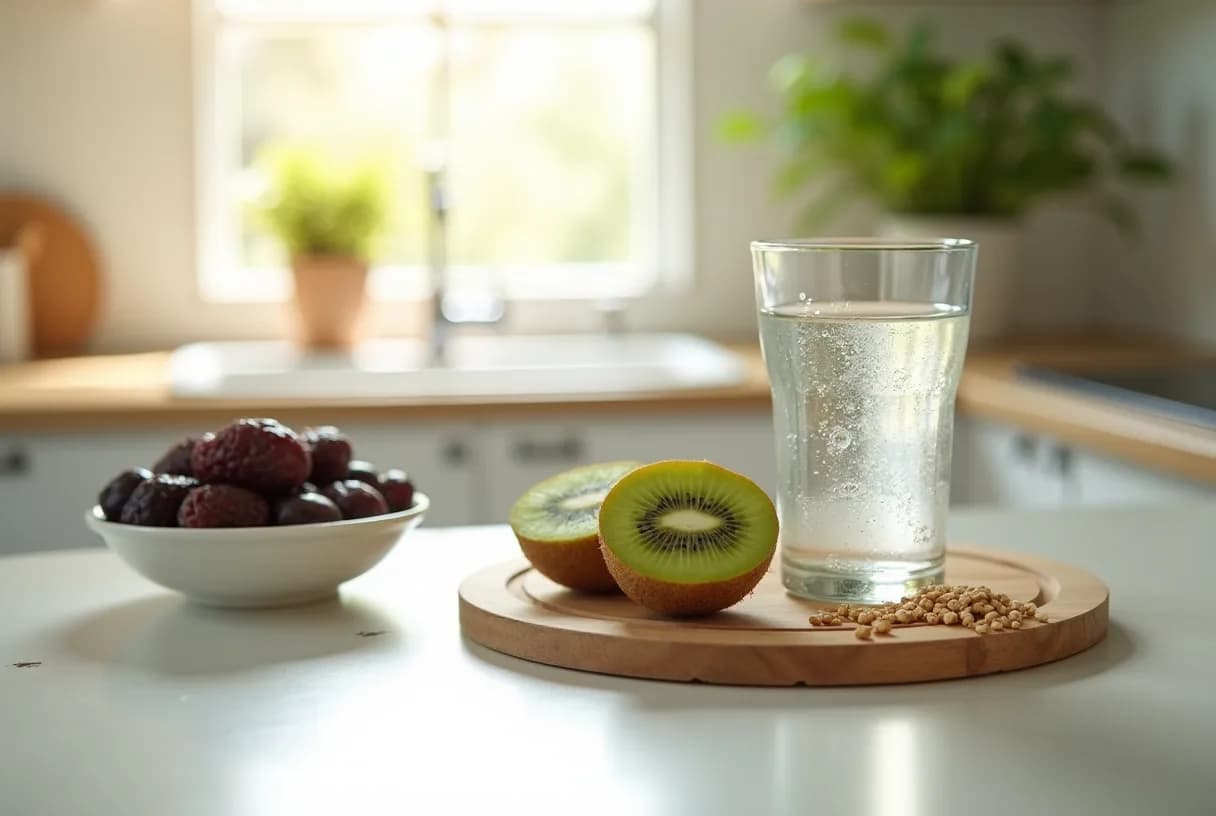
- Eat a proven food fix: three to four prunes or a glass of prune juice, or two kiwifruit. Both are backed by trials for softening stool and boosting frequency.
- Use your body's natural timing. The urge to go is strongest 20 to 30 minutes after a warm meal, especially breakfast. Sit then, prop your feet on a low stool so your knees sit above your hips, breathe, and do not strain or rush.
- Never ignore the urge. Holding it in lets the colon reabsorb water and makes the next stool harder.
- If that is not enough, add an osmotic option (PEG or magnesium citrate) per the label — see the table and cautions below.
What works, how fast, and cautions
| Remedy | Typical time to work | How to use it | Cautions |
|---|---|---|---|
| Fiber (soluble + insoluble) | Builds over 1–3 days | Increase gradually from food (oats, beans, fruit, vegetables) or a supplement, always with extra water. | Adding lots of dry fiber without fluid can worsen bloating or blockage; go slow. |
| Fluids (water) | Hours to a day (supportive) | Sip through the day; more when you raise fiber or exercise. | Rarely enough alone, but fiber and softeners need it to work. |
| Movement / walking | Same day (supportive) | 10–30 minutes of walking or light activity most days. | Very safe; not a standalone fix for stubborn constipation. |
| Magnesium citrate | 30 min–6 hours at a laxative dose; overnight at low doses | An osmotic laxative that draws water into the bowel; take per the product label. | Can cause cramping and loose stools; avoid with kidney disease unless your doctor approves. |
| Prunes / kiwifruit | Within 1–2 days | 3–4 prunes or prune juice, or 2 kiwifruit daily. | The sorbitol in prunes can cause gas; introduce gradually. |
| Osmotic laxative (PEG 3350) | 1–3 days (12–72 hours) | OTC powder mixed in liquid; follow the label; well tolerated for short-term use. | For regular or long-term use, check with a clinician or pharmacist. |
| Stool softener (docusate) | 12–72 hours | OTC; moistens stool, useful when straining is risky (for example after surgery). | Gentle but often weak; osmotic laxatives usually work better. |
Fiber: soluble vs insoluble — and how to add it without backfiring
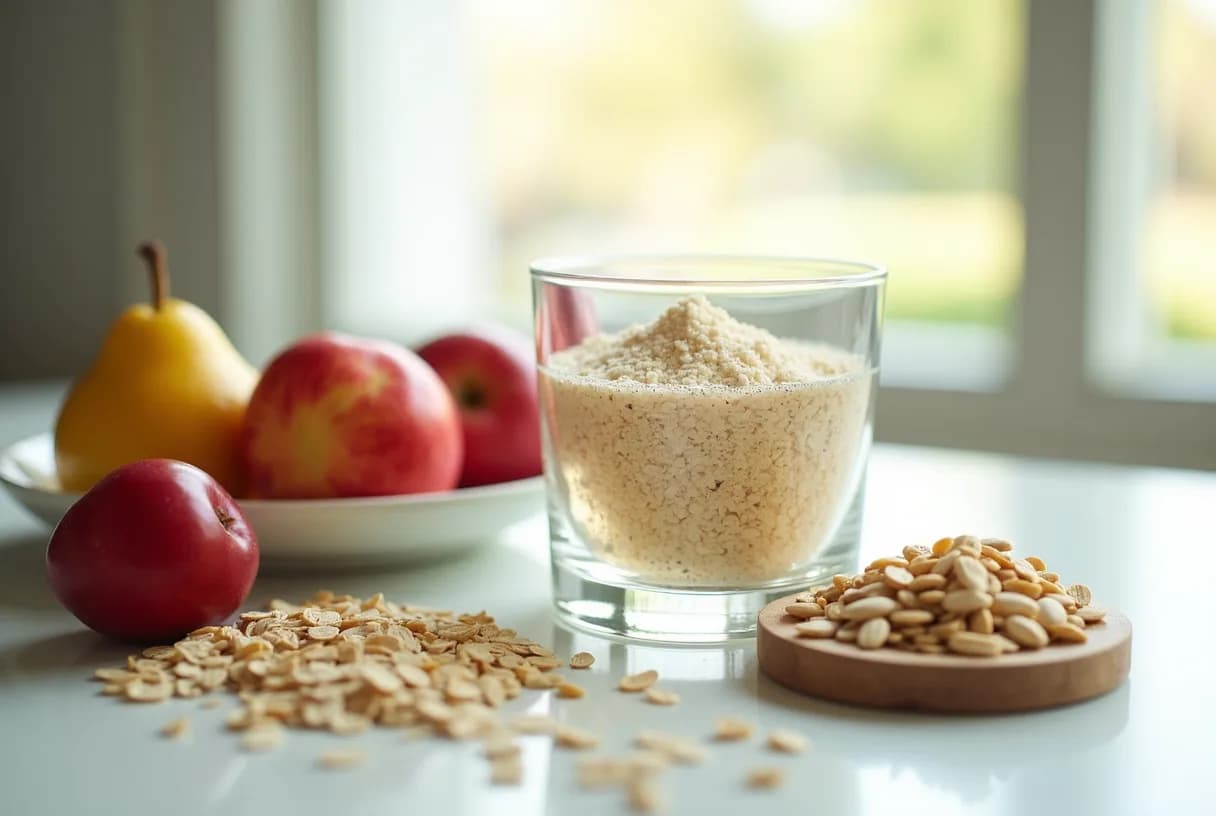
Fiber is the foundation of long-term regularity, but the type matters. Soluble fiber (in oats, barley, beans, apples, citrus, psyllium, and chia seeds) absorbs water and forms a soft gel that makes stool easier to pass — the gentler, more reliable choice for most constipation. Insoluble fiber (wheat bran, whole grains, nuts, and the skins of fruit and vegetables) adds bulk and speeds transit, but can feel harsh when you are already bloated.
Two rules make fiber help instead of hurt: raise it slowly over a couple of weeks so your gut adapts, and drink more water as you do. Piling on dry bran or a big fiber supplement without fluid is a classic way to make things worse. Aim for a mix of foods — oats, beans, lentils, berries, and vegetables — rather than leaning on one supplement. Most adults fall well short of the roughly 25 to 30 grams of fiber a day that supports regularity.
Does magnesium help constipation? Which type?
Yes — certain forms of magnesium are effective osmotic laxatives, meaning they pull water into the bowel to soften stool and trigger a movement. Magnesium citrate and magnesium hydroxide (milk of magnesia) are the laxative forms; magnesium citrate is a common choice and, at a laxative dose, can work within a few hours. Gentler forms like magnesium glycinate are chosen for sleep and muscle relaxation and are far less laxative. If constipation is your target, citrate is the more useful type of magnesium — take it per the label, start low, and expect loose stools if you overshoot.
Magnesium is generally well tolerated, but people with kidney disease should not use magnesium laxatives without medical advice, because it can build up to dangerous levels. To compare products, see our best magnesium for women guide, sanity-check a label with the supplement scorecard, and if you are wondering how quickly to expect results, our how long until it works tool sets realistic timelines. For timing basics, see when to take magnesium.
Where do laxatives and stool softeners fit?
When food, fluids, and movement are not enough, over-the-counter options are reasonable for short-term relief. The main categories:
- Osmotic laxatives (polyethylene glycol / PEG 3350, magnesium, lactulose) draw water into the colon. PEG is one of the best-studied and gentlest for regular constipation and usually works within one to three days.
- Stool softeners (docusate) let water mix into the stool. They are mild and best when you simply need to avoid straining — for example after childbirth or surgery — but they are weaker than osmotics.
- Bulk-forming fiber laxatives (psyllium, methylcellulose) work like dietary fiber and need plenty of water.
- Stimulant laxatives (senna, bisacodyl) act faster but are best kept for occasional use; ask a pharmacist before relying on them regularly.
A practical rule: reach for gentle, first-line options (fiber, fluids, an osmotic like PEG or magnesium) before stimulants, use the smallest amount that works, and do not self-treat for more than a week or two without checking in. This article is general education — never start, stop, or change a prescription medication on your own; ask your clinician or pharmacist.
Why is constipation worse in perimenopause and menopause?
Many women notice their gut slows down in midlife, and hormones are a big reason. Estrogen and progesterone both influence gut motility and the gut–brain axis; as levels fall and fluctuate through perimenopause, transit time can lengthen and stool spends longer in the colon, drying out. A few midlife factors stack on top:
- Shifting hormones change how fast the bowel moves — a pattern many people first notice premenstrually, then more persistently in perimenopause.
- Pelvic floor changes after menopause can make full emptying harder.
- Thyroid slowdown, more common with age, is a classic cause of constipation worth ruling out.
- Iron supplements, common for heavy perimenopausal periods, are notoriously constipating.
For the gut side of the menopause transition, see menopause and gut health and our guide to menopause bloating. Some women also find a daily probiotic helps regularity — see probiotics for menopause.
Habits that prevent constipation
- Eat fiber-rich foods at most meals, and vary the sources.
- Drink enough that your urine stays pale; add fluids when you raise fiber.
- Move daily — even walking counts.
- Answer the urge promptly; do not hold it.
- Give yourself unhurried, regular toilet time, ideally after breakfast, with your feet raised on a low stool.
- Review constipating medicines (some painkillers, iron, certain antacids, and some blood-pressure and mood drugs) with your pharmacist.
Explore more in our nutrition hub.
When to see a doctor
Most constipation is short-lived and harmless. But some symptoms point to something that needs evaluation. Book a medical review promptly if you have:
- Blood in your stool, or black, tarry stools.
- Unexplained weight loss.
- A sudden or persistent change in your bowel habits, especially if you are over 50.
- Constipation lasting more than three weeks despite self-care, or that keeps coming back.
- Persistent belly pain, thin "pencil" stools, ongoing rectal bleeding, unexplained tiredness or anemia, or a family history of bowel cancer or inflammatory bowel disease.
Seek urgent or emergency care if you have no bowel movements at all together with belly pain, bloating, and vomiting, or a hard, swollen, tender abdomen. This can signal a bowel obstruction, which is a medical emergency. Also get prompt help for severe abdominal pain or a first episode of significant rectal bleeding.
The bottom line
Constipation almost always improves with the basics done consistently: more fluid, daily movement, gradually increased soluble fiber with water, and a food fix like prunes or kiwi. Add an osmotic option — PEG or magnesium citrate — when you need faster or stronger help, and keep stimulant laxatives for occasional use. In midlife, factor in the hormonal shifts of perimenopause and check for treatable causes like thyroid changes or iron supplements. And never ignore blood, weight loss, or a sudden change in bowel habits — those deserve a doctor, not a home remedy.