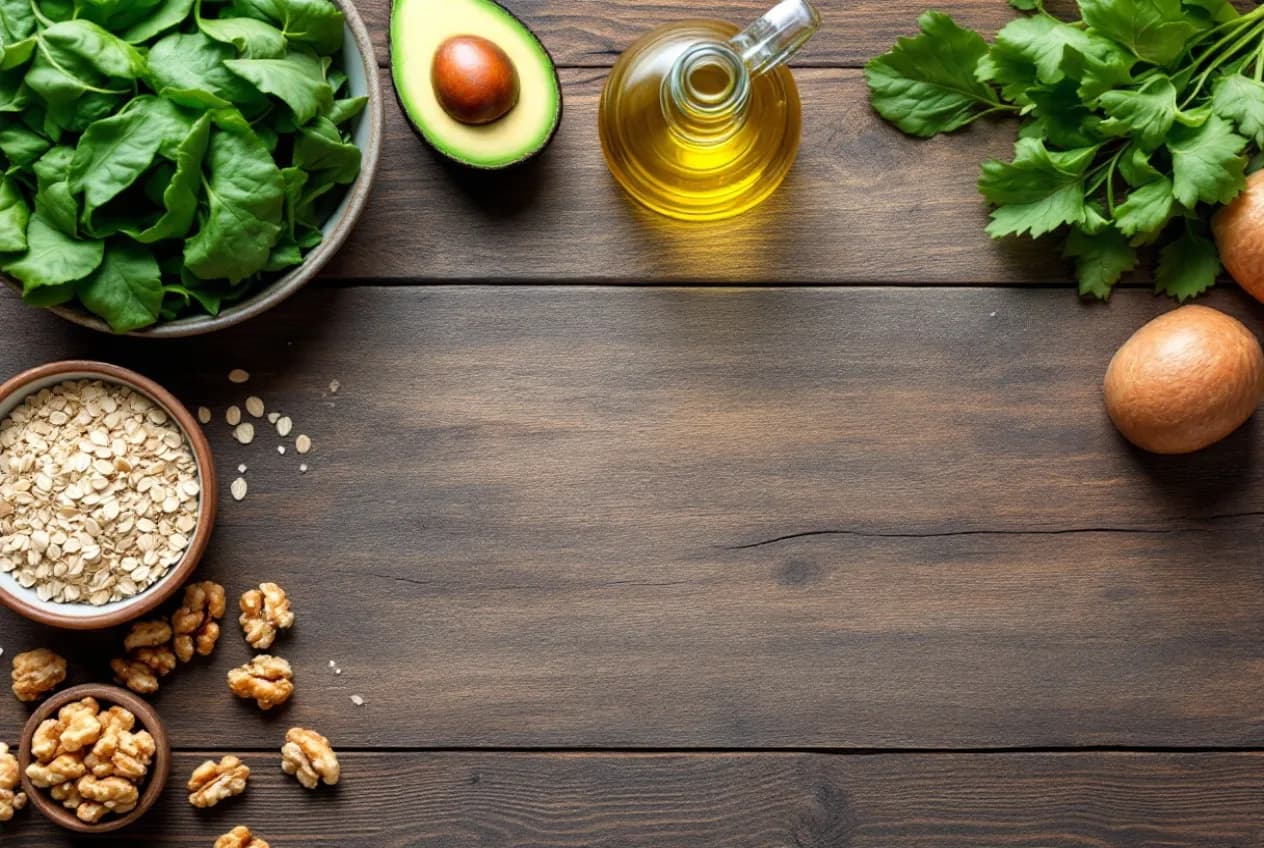
When people talk about high-cholesterol foods, they usually mean foods rich in dietary cholesterol — egg yolks, shellfish, organ meats. But for most people, the cholesterol in food nudges blood cholesterol only modestly. The bigger dietary levers are the saturated and trans fats that often travel alongside it. This guide sorts foods into what to limit and what to favour. It also stays honest: food is one lever within your overall heart health, not a guarantee — a theme the broader women's heart health guide explores in more depth.
Do high-cholesterol foods actually raise your cholesterol?
It is a fair question, and the answer surprises people. The cholesterol you eat has a smaller effect on the LDL cholesterol in your blood than the type of fat you eat. Your liver makes most of your cholesterol, and it adjusts production based on what arrives from food. For many people, eating more cholesterol simply prompts the body to make a little less.
Saturated fat is the stronger driver. It tends to raise LDL — the particle that builds up in artery walls — while trans fats raise LDL and lower protective HDL cholesterol at the same time, which is why they are the worst offenders. Refined carbohydrate and alcohol mainly push up triglycerides. So the useful question is not only "how much cholesterol is in this food?" but "what fats and refined carbs come with it?" For the full picture on the numbers, our companion guide on high cholesterol in women is a good next stop.
High-cholesterol foods and fats to limit
These are the foods that most reliably raise LDL for most people. "Limit" does not mean "never" — it means smaller portions, less often, and better swaps where you can.
- Fatty and processed meats. Sausages, bacon, salami, hot dogs and fatty cuts are high in saturated fat and salt. Processed meats also carry independent heart risks beyond their fat.
- Deep-fried foods. Chips, fried chicken and battered takeaways absorb a lot of fat, and reused commercial frying oils can be a hidden source of trans fats.
- Baked goods and pastries with partially hydrogenated oil. Some biscuits, cakes, pastries and margarines still contain trans fats in places where they are not banned. Check labels for "partially hydrogenated" oils.
- Excess full-fat dairy. Butter, cream, and large amounts of full-fat cheese are concentrated saturated fat. Modest cheese and plain yogurt are fine for most people.
- Tropical oils in ultra-processed foods. Coconut and palm oil are high in saturated fat and common in packaged snacks.
Foods to favour versus high-cholesterol foods to limit
Use this favour-versus-limit table as a shopping-list shortcut. It groups everyday foods by their usual effect on blood cholesterol, not by a single "good" or "bad" label.
| Category | Favour | Limit |
|---|---|---|
| Protein | Oily fish, skinless poultry, beans, lentils, tofu | Sausages, bacon, salami, fatty red-meat cuts |
| Fats and oils | Olive oil, rapeseed oil, avocado, nut butters | Butter, lard, coconut and palm oil, hard margarine |
| Grains | Oats, barley, wholegrain bread and pasta, brown rice | White pastries, many packaged biscuits and cakes |
| Dairy | Plain low-fat yogurt, modest cheese, unsweetened milk | Cream, large portions of full-fat cheese |
| Snacks | Unsalted nuts, fruit, vegetable sticks, hummus | Deep-fried snacks, trans-fat baked goods, crisps |
Foods that help lower cholesterol
The other half of eating for lower cholesterol is what you add, not just what you cut. A few food groups have reasonably consistent evidence behind them.
Soluble fibre
Oats, barley, beans, lentils, apples and citrus are rich in soluble fibre, which binds cholesterol in the gut so less is absorbed. A bowl of porridge or a portion of beans most days is one of the simplest, best-supported changes you can make. Build it in gradually and drink plenty of water, since a sudden jump in fibre can leave you bloated for a week or two before your gut adjusts.
Oily fish and healthy fats
Salmon, sardines and mackerel supply omega-3 fats that support heart health and help triglycerides. Swapping butter for olive oil and adding a small handful of unsalted nuts replaces saturated fat with the unsaturated kind that tends to lower LDL.
Fruit, vegetables and plant foods
Plenty of fruit and vegetables add fibre, potassium and plant compounds while crowding out less helpful foods. This overall pattern is the backbone of a heart-healthy diet. For a step-by-step plan, see how to lower cholesterol, and if your HDL runs low, how to raise HDL cholesterol covers the moves that help most.
What about eggs, shellfish and full-fat dairy?
These are the classic "high-cholesterol foods" people worry about. Eggs and shellfish (prawns, squid) are genuinely high in dietary cholesterol, yet for most people they have a modest effect on blood cholesterol because they are low in saturated fat. For most healthy people, an egg or two a day sits comfortably within a balanced pattern. Current guidance focuses less on a strict daily cholesterol limit and more on the overall dietary pattern. People with diabetes may be more sensitive to dietary cholesterol, while those with familial high cholesterol usually need medical treatment alongside diet — so it is worth discussing your own situation with a clinician rather than following a blanket rule.
Food is one lever, not the whole story
Diet matters, but it sits alongside factors you cannot eat your way out of: genetics, age, physical activity, smoking, body weight and hormones. For women, cholesterol often rises around the menopause transition as estrogen falls, which is why menopause and heart health is worth understanding. Sleep, stress and how much you move each week feed into the same picture, so no single food fixes it in isolation.
Being honest: for some people, especially those with an inherited condition or existing heart disease, diet alone will not bring numbers into a safe range. Medicines such as statins can lower LDL substantially and reduce cardiovascular events, but they carry potential side effects and are a decision for you and your clinician based on your overall risk — not something to start or stop on your own. Food changes still count, whether or not you also take medication.
Building a heart-friendly plate
You do not need a perfect diet — you need better defaults. A few swaps, repeated, move the needle more than short bursts of strictness.
- Base meals on plants and wholegrains: half the plate vegetables, a quarter wholegrains, a quarter lean protein.
- Cook with olive or rapeseed oil instead of butter, lard or hard margarine.
- Add a soluble-fibre food daily — oats at breakfast, beans or lentils at lunch or dinner.
- Eat oily fish once or twice a week and treat processed meat as an occasional food.
- Read labels and skip anything listing "partially hydrogenated" oil.
When to talk to a clinician about your cholesterol
Food is a lever you can pull today, but you cannot see cholesterol working — only a blood test can. Talk to a clinician if you have not had a lipid panel recently, if a previous test was high, or if heart disease runs in your family. Seek urgent care for red-flag symptoms such as chest pain or pressure, pain spreading to the arm, jaw or back, sudden breathlessness, or unusual fatigue, sweating and nausea — in women these signs can be quieter and easy to dismiss. A clinician can confirm your numbers, factor in your full risk, and help you decide whether food changes alone are enough or whether medication belongs in the plan.