Call 911 now — read this first
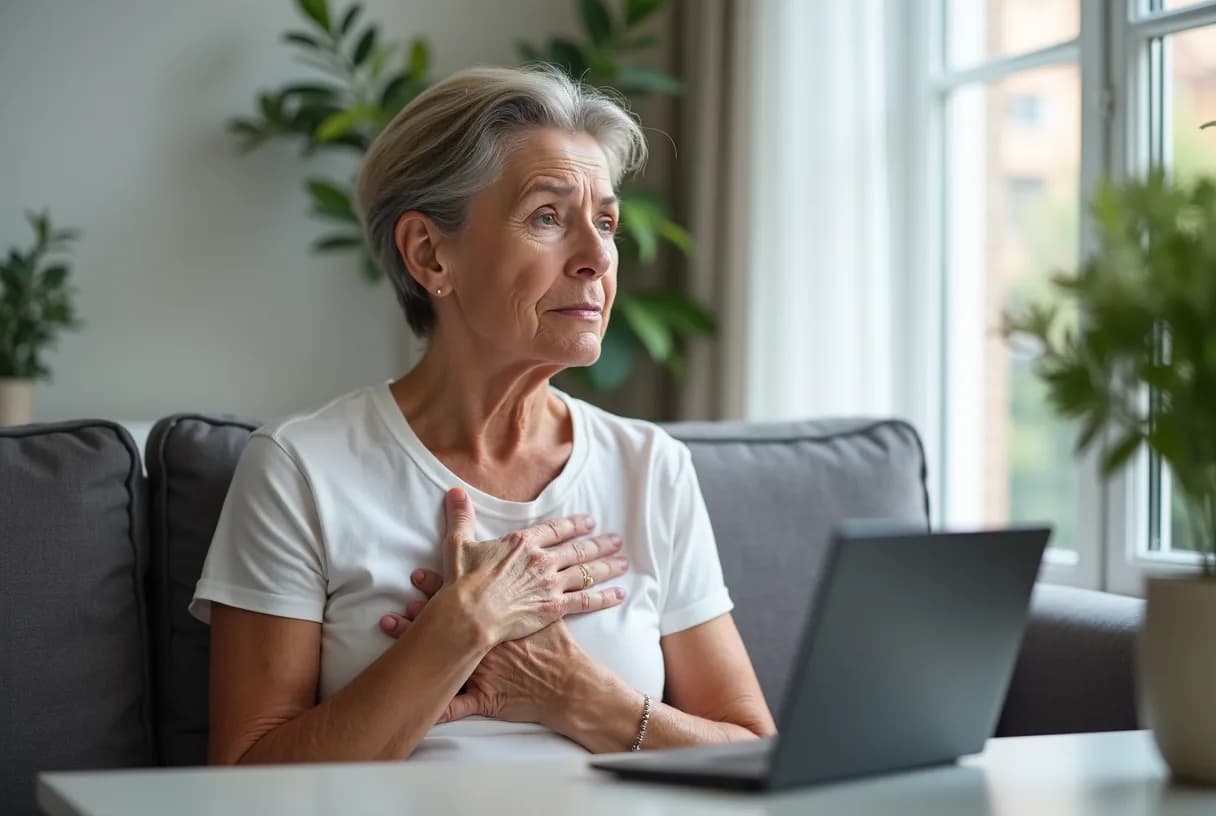
If you think you might be having a heart attack, call emergency services immediately (911 in the US, 999 in the UK, 112 across the EU). Call if you have chest pressure, tightness, squeezing or pain that lasts more than a few minutes or comes and goes — and call even if you have no chest pain but you have sudden shortness of breath, a cold sweat, unexplained nausea or vomiting, pain in the jaw, neck, back or arms, or lightheadedness that feels wrong to you.
- Do not drive yourself. Ambulance crews can start treatment, run an ECG in your living room and alert the hospital before you arrive. If you collapse at the wheel, you take other people with you.
- Do not wait to see whether it passes. Heart muscle dies by the minute. Time to treatment is the single biggest thing you control.
- Do not talk yourself out of it. It is better to be wrong and be checked than to be right and be late. No paramedic, nurse or doctor will think you were foolish — they would far rather see you at hour one than at hour six.
Emergency services can tell you whether to chew aspirin while you wait. Follow their instruction; do not decide on your own.
The short answer
Chest pain or discomfort is still the most common heart attack symptom in women, as it is in men — anyone who tells you to ignore chest pain because "women present differently" is giving you dangerous advice. In the VIRGO study of nearly 3,000 adults aged 18–55 hospitalised with a confirmed heart attack, 87% of women presented with chest pain, pressure, tightness or discomfort. What is true is that women are more likely than men to have a heart attack without chest pain, to have several loud non-chest symptoms alongside it, and to have the whole picture attributed to anxiety, reflux, a virus or "just perimenopause."
The mechanism is not mysterious. The sensory nerves carrying pain from the heart enter the spinal cord at the same segments that serve the jaw, neck, shoulders, arms and upper back, and vagal fibres from the inferior wall of the heart feed into the pathways that trigger nausea and sweating. A heart starved of blood can therefore announce itself as a sore jaw, a burning "indigestion," breathlessness on the stairs, or a cold sweat and vomiting — with the chest silent.
The full symptom list
The American Heart Association, the National Heart, Lung, and Blood Institute and the CDC all list the same core set. What matters is that they can occur in any combination, and that in women the non-chest symptoms are more likely to be the loudest ones.
| Symptom | What it actually feels like | What it commonly gets blamed on |
|---|---|---|
| Chest discomfort (most common) | Pressure, squeezing, fullness, a weight or a band — often described as pressure rather than pain. Lasts more than a few minutes, or goes away and comes back. | Stress, a panic attack, a pulled muscle, "I just need to sit down" |
| Shortness of breath | Breathlessness at rest or on minimal effort, sometimes with no chest symptom at all. Can be the only symptom. | Deconditioning, weight, asthma, anxiety, "I'm just unfit now" |
| Nausea or vomiting | Sudden nausea, retching or actual vomiting, often with a cold sweat. Frequently reads as a stomach bug or bad reflux. | Food poisoning, indigestion, gallbladder, a virus |
| Pain in jaw, neck, back or arms | Ache, pressure or heaviness in the jaw, throat, neck, between the shoulder blades, or in one or both arms. May radiate or migrate. | Dental problem, "slept badly," trapped nerve, frozen shoulder |
| Unusual, profound fatigue | Exhaustion out of all proportion to what you did — sometimes starting days or weeks before, sometimes described as "I couldn't make the bed without stopping." | Menopause, thyroid, anaemia, stress, "just being 55" |
| Cold sweat | Breaking out in a clammy sweat that is not a hot flash — usually with another symptom, and usually frightening. | Hot flashes, night sweats, anxiety |
| Lightheadedness or faintness | Sudden dizziness, near-fainting, a sense that something is badly wrong. | Low blood sugar, dehydration, a "funny turn" |
Note the overlap with the ordinary background noise of midlife: fatigue, breathlessness, sweats, nausea, anxiety. That overlap is exactly the problem. If you are 52 and shattered, the answer is usually not a heart attack. But sudden, new, severe or escalating versions of these — particularly in combination, particularly with exertion, particularly with a cold sweat — are not something to sleep on.
Why women's heart attacks look different
Three things are going on, and none of them is "women are more emotional about symptoms."
Referred pain. The heart has no sharp, well-localised pain map. Its sensory nerves converge in the spinal cord with those from the chest wall, arms, neck and jaw, so the brain misattributes the signal to whichever body part it can localise. Vagal fibres from the inferior surface of the heart connect to brainstem nuclei that generate nausea, vomiting and sweating. That is why an inferior-wall heart attack can look like gastroenteritis.
The plaque behaves differently. The classic male-pattern heart attack is a fatty plaque that ruptures and blocks an artery. In women — especially younger women — a larger share of events are caused by plaque erosion, where a clot forms over an intact surface, and by disease of the small vessels rather than a single tight blockage in a big one. The AHA's scientific statement on acute myocardial infarction in women describes exactly this pattern. These events can produce less dramatic ECG changes and smaller troponin rises, which is precisely why they get downgraded in triage.
Blunted signalling. Diabetes and older age dull cardiac pain signalling, which is part of why "silent" heart attacks — discovered later on an ECG, with no recognised event — happen at all. The CDC puts it at about one in five heart attacks.
Women delay — and women get delayed
This is the section that saves lives, and it is the one the symptom-list sites do not write.
Women wait longer than men before seeking help for heart attack symptoms. The reason is not stoicism, it is a script mismatch: you are waiting for a symptom that never comes, so you keep looking for another explanation. Women in this position clean the kitchen, take an antacid, lie down, wait for morning, or apologise for wasting anyone's time.
Then the second delay happens inside the system. In the VIRGO study, 53% of women said a healthcare provider did not think their symptoms were heart-related, compared with 37% of men — and every one of those patients was later confirmed to have had a heart attack. The AHA's scientific statement on acute myocardial infarction in women documents the downstream consequences: women are less likely to receive timely reperfusion and guideline-recommended treatment, and younger women having a heart attack fare worse in hospital than men of the same age.
So you have to carry your own advocacy into the room. Two things help:
- Say the sentence. Not "I feel a bit off." Say: "I am concerned I am having a heart attack. I would like an ECG and a troponin." That sentence changes the triage category.
- Give the timeline. "This started 40 minutes ago, at rest, with a cold sweat" is clinical information. "I've been tired lately" is not.
If you are sent home and the symptom returns or worsens, go back. Return visits are not an admission of error; they are how missed diagnoses get caught.
The risk factors specific to women that almost nobody mentions
Blood pressure, cholesterol, smoking, diabetes and family history matter in women exactly as they do in men — and you can work through yours with our heart risk check. But four risks are female-specific and routinely left out of the conversation.
| Risk | What it means for you |
|---|---|
| Menopause | Risk rises sharply across and after the menopause transition. Oestrogen supports endothelial function and nitric oxide signalling; as it falls, LDL cholesterol and blood pressure tend to rise and visceral fat increases. Heart disease becomes the leading cause of death in women largely on the other side of this line. More: menopause and heart health. |
| Adverse pregnancy outcomes | Pre-eclampsia or gestational hypertension, gestational diabetes, preterm birth, a small-for-gestational-age baby and placental abruption all raise lifetime cardiovascular risk — the AHA's statement on adverse pregnancy outcomes puts the increase in later cardiovascular disease after a hypertensive disorder of pregnancy at roughly two-fold. A pregnancy complication from 20 years ago belongs in your cardiac history. Say it out loud at your next appointment. |
| Autoimmune disease | Rheumatoid arthritis, lupus and other chronic inflammatory conditions raise cardiovascular risk independently of cholesterol, through vascular inflammation. Women make up the large majority of these patients, and this rarely makes it into the risk conversation. |
| SCAD | Spontaneous coronary artery dissection — a tear in the artery wall, not a cholesterol plaque. The overwhelming majority of cases occur in women, often younger women with few or no classic risk factors, sometimes in the weeks after childbirth or after intense physical or emotional stress. The AHA's scientific statement on SCAD reports it may cause up to about 35% of heart attacks in women aged 50 and under. This is why "I'm too young and too healthy for this" is not a safe conclusion. |
A "clear" angiogram does not always mean nothing was wrong
Some women have a genuine heart attack with no obstructed artery on angiography. This is called MINOCA (myocardial infarction with non-obstructive coronary arteries), and per the AHA's MINOCA scientific statement it accounts for roughly 5–6% of all heart attacks referred for coronary angiography — disproportionately in women and in younger patients. The related INOCA (ischaemia with no obstructive coronary arteries) describes ongoing chest pain and demonstrable ischaemia driven by small-vessel dysfunction or coronary spasm rather than a blocked pipe.
The practical consequence is worth knowing before it happens to you: a woman can be told her arteries are "clean," be discharged with a diagnosis of anxiety, and still have a mechanism causing real heart muscle damage and real future risk. MINOCA is a working diagnosis that calls for further work-up — cardiac MRI, intravascular imaging or provocation testing — not a discharge letter. If you have had a positive troponin and an unobstructed angiogram, the question to put to a cardiologist is: "What caused my troponin rise, and are we investigating MINOCA?"
When to see a doctor (and when to call an ambulance)
Call emergency services immediately — do not drive, do not wait — if you have any of:
- Chest pressure, tightness, squeezing or pain lasting more than a few minutes, or coming and going
- Sudden shortness of breath, with or without chest discomfort
- Pain or heaviness spreading to the jaw, neck, throat, back, or one or both arms
- Cold sweat with nausea, vomiting or lightheadedness
- A sense of impending doom, or symptoms that frighten you and that you cannot explain
Book an urgent (same-week) appointment — not an ambulance — if you have:
- Chest tightness, breathlessness or jaw/arm ache that reliably comes on with exertion and settles with rest (this pattern suggests angina and needs assessment before it becomes an emergency)
- New, unexplained, escalating fatigue or breathlessness over days to weeks, particularly after menopause — the differential is wide, and fatigue causes in women covers it
- A history of pre-eclampsia, gestational diabetes or preterm birth and no cardiovascular risk assessment since — ask for blood pressure, lipids and glucose to be checked
- Palpitations that are new, sustained or come with faintness — see menopause heart palpitations for the benign versus non-benign patterns
Do not stop, start or change any heart, blood-pressure or hormone medication based on anything you read here, including aspirin. Those decisions belong with your prescriber.
What is actually in your control
The modifiable drivers of a woman's heart attack risk are blood pressure, lipids, glucose, smoking and muscle. Blood pressure is the one most often overlooked in women in their 40s and 50s (high blood pressure in women), and the post-menopausal lipid shift is the one most often written off as inevitable (high cholesterol in women). Neither is inevitable. Ask for the numbers — a blood pressure reading, a full lipid panel, HbA1c — write them down, and track them over time rather than glancing at them once. Our women's heart health guide covers what moves each one, and heart disease symptoms in women covers the slower-burn signs that precede an event by years.
And learn the symptom list well enough that you would recognise it at 3am, in yourself, without hoping it was the curry.