High cholesterol rarely causes symptoms, so it is easy to ignore — yet it quietly raises the risk of heart attack and stroke, and that risk tends to climb for women around menopause as estrogen falls. The encouraging part: diet and lifestyle can meaningfully lower LDL cholesterol for many people. Here is what actually works, and when it isn't enough.
Why cholesterol matters more after menopause
Estrogen helps keep cholesterol in a more favorable balance. As levels drop in perimenopause and beyond, many women see LDL ("bad" cholesterol) and triglycerides rise while protective HDL may shift unfavorably. Combined with rising blood pressure and weight changes around this time, that is why heart disease — the leading cause of death in women — deserves real attention at midlife. Our overview of menopause and heart health goes deeper on the connection.
The lifestyle steps that lower LDL
These are first-line, well-evidenced, and worth doing whether or not you also need medication. The table summarizes what to prioritize.
| Step | What to do | Why it helps |
|---|---|---|
| Eat more soluble fiber | Oats, oat bran, barley, beans, lentils, apples, pears, citrus, psyllium | Binds cholesterol in the gut so less is absorbed — oats are genuinely well-evidenced for lowering LDL |
| Swap your fats | Replace saturated and trans fats with olive oil, nuts, seeds, avocado, oily fish | Unsaturated fats lower LDL when they replace saturated fat |
| Eat a Mediterranean pattern | Vegetables, fruit, whole grains, legumes, fish, olive oil; less red and processed meat | One of the best-studied dietary patterns for heart health |
| Be active | Aim for about 150 minutes of moderate activity weekly | Improves cholesterol balance and overall cardiovascular risk |
| Reach a healthy weight | Even modest loss if you carry excess weight | Lowers LDL and triglycerides, raises HDL |
| Don't smoke | Quit; avoid secondhand smoke | Smoking lowers HDL and damages arteries |
| Limit alcohol | Less is better; not drinking is a safe choice | Excess raises triglycerides |
Soluble fiber: start with oats
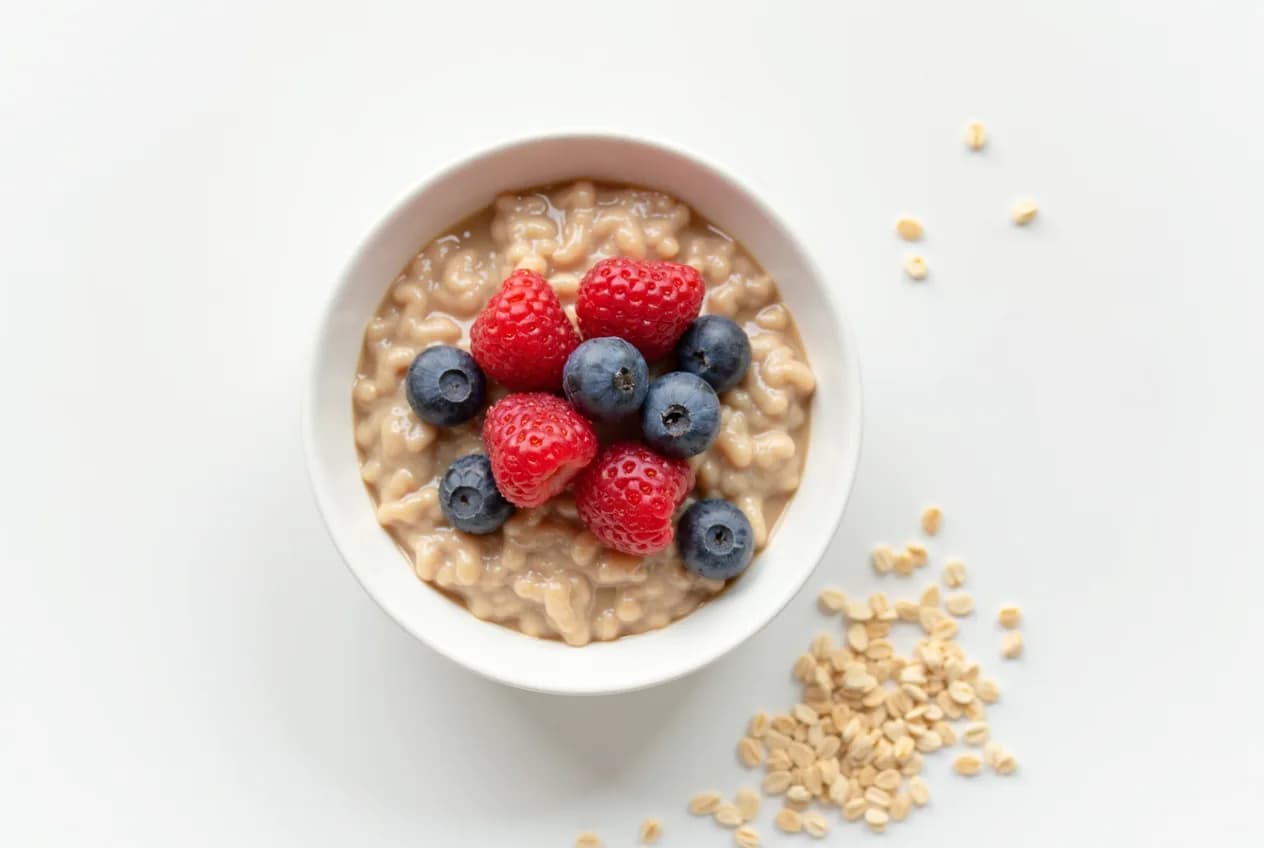
Soluble fiber is the single most actionable food change. A bowl of porridge, overnight oats, or oat-based options at breakfast, plus a daily serving of beans or lentils, is a realistic way to nudge LDL down. Apples, pears, citrus, barley, and psyllium add more. Aim to build these in most days rather than chase a single "magic" food.
Better fats, not just less fat
The win is in the swap. Trading butter and fatty processed meats for olive oil, nuts, seeds, and oily fish (such as salmon, sardines, and mackerel) lowers LDL more reliably than simply eating "low fat." Cut trans fats — found in some fried and packaged foods — wherever you see them.
A Mediterranean-style pattern ties it together
You don't need a rigid plan. A heart-healthy diet built around vegetables, fruit, whole grains, legumes, fish, and olive oil — with less red and processed meat — captures most of the benefit. Our beginner's guide to the Mediterranean diet translates this into everyday meals.
Move more, weigh less, skip smoke
Regular activity improves your cholesterol profile and lowers overall heart risk — see the science-backed benefits of exercise. If you carry excess weight, even a modest loss can help, especially around midlife when weight changes are common. Not smoking and keeping alcohol low round out the picture.
Honest expectations: how much can lifestyle do?
For many women, consistent diet and lifestyle changes can lower LDL meaningfully — but the size of the effect varies a lot from person to person. Some see a substantial drop; others, especially those with a genetic tendency to high cholesterol or a higher overall risk of heart disease, find that lifestyle alone doesn't get them to a safe level. That is not a personal failure — it is biology.
When lifestyle isn't enough, statins or other cholesterol-lowering medicines can substantially reduce heart-attack and stroke risk. Whether you need them — and what your target should be — depends on your full risk picture, not your LDL number alone. This is a clinician decision; our guide to high cholesterol in women explains how that conversation usually goes. Importantly, the menopause–heart link does not mean estrogen or HRT is recommended to prevent heart disease — that is a separate, individualized discussion to have with your clinician.
Skip the "cholesterol detox" hype
There is no supplement, tea, or "cleanse" that detoxes cholesterol. Marketing claims around so-called miracle pills are not supported by good evidence, and they can delay care that works. Food-based soluble fiber, better fats, and — when needed — prescribed medication are what move the needle. If you take a prescribed cholesterol medicine, do not stop or skip it on your own. If you have side effects or concerns, raise them with your clinician rather than quitting; there are usually alternatives.
Reference ranges (general guidance, not a target)
These figures are common references, not a prescription. Your personal targets depend on your overall cardiovascular risk and should be set with a clinician. Units vary by country (mg/dL in the US; mmol/L in much of Europe).
| Measure | General reference |
|---|---|
| Total cholesterol | Lower is generally better; commonly below about 200 mg/dL |
| LDL ("bad") | Lower is better; often cited near 100 mg/dL, with lower targets if you are higher-risk |
| HDL ("good") | Higher is generally better |
| Triglycerides | Lower is better; commonly below about 150 mg/dL |
When professional care makes sense
Call emergency services (911 in the US) right away if you have chest pain or pressure, pain spreading to the arm, jaw, neck, or back, shortness of breath, a cold sweat, nausea, or sudden severe fatigue — these can signal a heart attack. Do not wait and do not drive yourself. In women, heart-attack symptoms are more often subtle or "atypical" — jaw, neck, or back pain, nausea, unusual tiredness, or breathlessness — and are easily dismissed; take them seriously. Learn the fuller picture in heart disease symptoms in women.
Book a routine appointment to have your cholesterol checked, to discuss your numbers and personal target, and to weigh whether lifestyle changes, medication, or both are right for you — particularly if heart disease runs in your family, you have high blood pressure or type 2 diabetes, or you are moving through menopause. Your clinician can build a plan that fits your real risk.
Related: Before setting a target, see what's considered healthy for your age and sex in our Cholesterol Levels by Age: Charts for Women and Men guide.
Related: Diet does much of the heavy lifting here, so it helps to know exactly which High-Cholesterol Foods: What to Limit and What to Eat when you're building meals around lowering your numbers.