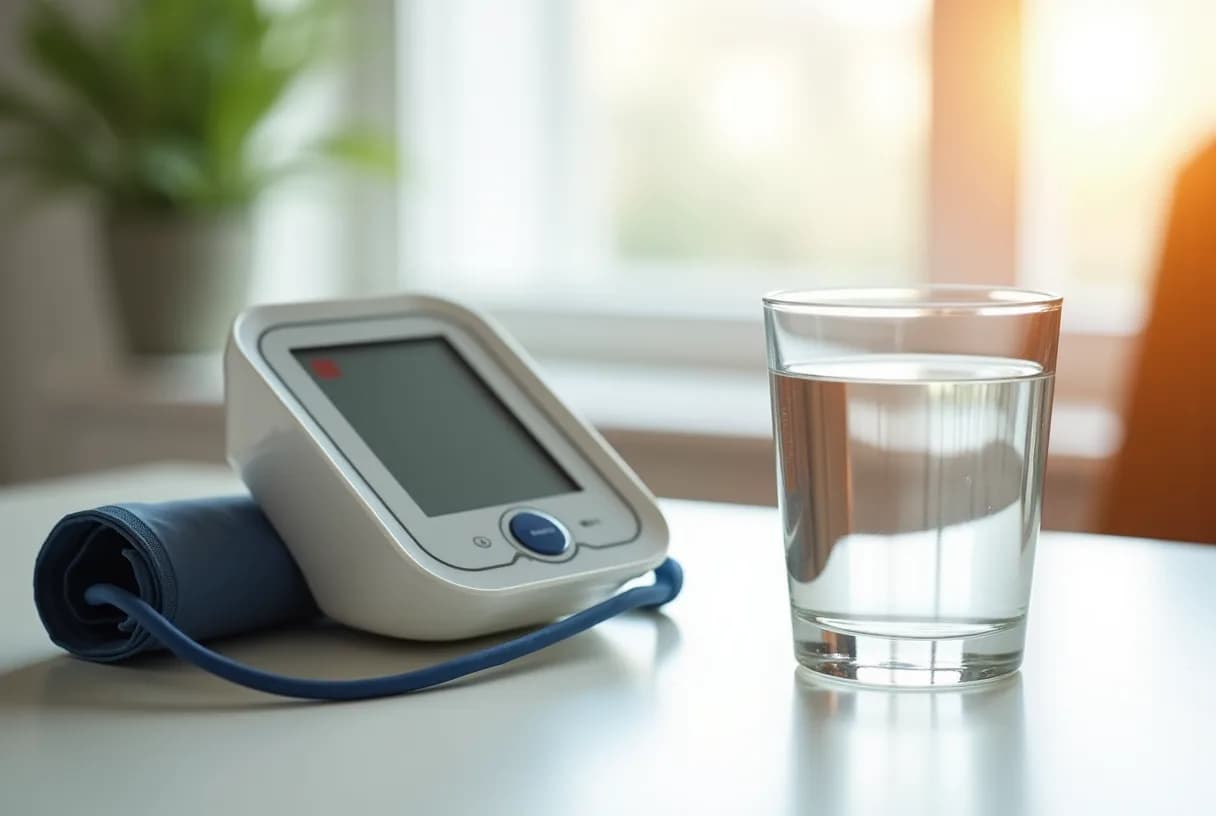
Staying well hydrated helps your body regulate blood pressure the way it should, and being dehydrated can push your numbers up temporarily. But plain water is not a treatment for high blood pressure. No amount of water will bring chronically high readings down the way an eating pattern like DASH, regular movement, weight and sodium management, and — when a clinician decides it's needed — medication can. Think of good hydration as background support for a healthy cardiovascular system, not a cure.
Does drinking water lower blood pressure?
Not in any meaningful, lasting way. Water is essential for the systems that keep blood pressure stable — blood volume, kidney function, and the hormones that fine-tune how tightly your vessels squeeze — so being properly hydrated helps those systems do their job. What water does not do is act like a blood-pressure drug. If your readings are consistently in the high range, drinking more water won't correct that.
There's an honest wrinkle worth knowing: in some people, drinking a large glass of water actually nudges blood pressure up for a short time. Researchers call this the "osmopressor" or water-drinking pressor response, and it's most noticeable in older adults and people with certain nervous-system conditions. It's usually harmless and short-lived, but it's one more reason plain water can't be counted on to lower your numbers.
How dehydration, sodium, and potassium affect blood pressure
When you're low on fluid, your blood volume drops. Your body responds by releasing vasopressin (an antidiuretic hormone) and switching on the renin-angiotensin system, which tightens blood vessels and tells the kidneys to hold on to sodium and water. That vessel-tightening can raise blood pressure. Dehydration can also cause light-headedness from low pressure when you stand — so the relationship isn't a simple "dehydrated equals high." The practical takeaway: chronic under-drinking is a stressor your cardiovascular system doesn't need, and steady, normal hydration removes it.
Sodium and potassium are the two minerals that move blood pressure the most, and they pull in opposite directions.
| Mineral | Effect on blood pressure | General daily target | Where it's found |
|---|---|---|---|
| Sodium | Excess makes the body hold on to water, raising pressure — more so in salt-sensitive people | Under 2,300 mg; ideally near 1,500 mg for many with hypertension | Packaged and restaurant food, bread, cured meats, sauces, snacks |
| Potassium | Helps relax vessel walls and flush excess sodium, tending to lower pressure | About 2,600 mg a day for women, from food | Leafy greens, potatoes, beans, bananas, yoghurt, avocado, tomato |
Most adults eat far more sodium than they need — average intake in the US is around 3,400 mg a day, well above the 2,300 mg ceiling most guidelines suggest and roughly double the 1,500 mg that's ideal for many people with high blood pressure. Meanwhile, most of us fall short on potassium. Shifting that ratio — less packaged and restaurant food, more vegetables, fruit, beans, and dairy — is one of the most reliable dietary levers you have.
One caution: potassium isn't automatically safe in unlimited amounts. People with kidney disease or those on certain blood-pressure medications can retain too much, so food-first is the rule and potassium supplements should only be used under medical guidance.
Does the "pink salt trick" lower blood pressure?
No. The viral "pink salt trick" — stirring Himalayan salt (sometimes with lemon) into a morning glass of water — is claimed to balance minerals, boost metabolism, and even lower blood pressure. None of that holds up. Pink salt is chemically almost the same as table salt; its "trace minerals" are present in amounts far too small to matter. What you're actually adding is sodium, the one thing people with blood-pressure concerns are usually trying to cut. For anyone who is salt-sensitive, a daily salty drink is more likely to nudge pressure up than down. We break the claim down fully in does the pink salt trick work.
What actually lowers blood pressure
The changes with real evidence behind them are unglamorous but effective. Combined, they can lower blood pressure as much as a single medication — and sometimes reduce how much medication a person needs.
| Change | Approximate systolic drop | Notes |
|---|---|---|
| DASH-style eating | about 11 mmHg | Largest dietary effect; raises potassium, lowers sodium |
| Regular aerobic activity | about 5–8 mmHg | Roughly 150 minutes a week; works within weeks |
| Cutting excess sodium | about 5–6 mmHg | Biggest gains if you start high |
| Losing excess weight | about 5 mmHg (more with larger loss) | Roughly 1 mmHg per kilogram for some people |
| Limiting alcohol | about 4 mmHg | If currently drinking above recommended limits |
| Medication | varies, often substantial | Prescribed and monitored by a clinician |
A few specifics:
- The DASH eating pattern (Dietary Approaches to Stop Hypertension) is the most studied diet for blood pressure: plenty of vegetables, fruit, whole grains, beans, nuts, and low-fat dairy, with less salt, red meat, and sugar. It works partly by raising potassium and lowering sodium at the same time. See our heart-healthy diet guide.
- Movement — about 150 minutes a week of brisk walking, cycling, or similar aerobic activity — reliably lowers pressure, and it starts working within weeks.
- Weight matters because pressure tends to fall as excess weight comes off; even a modest loss helps. Midlife weight gain is common and worth addressing gently — see menopause weight gain.
- Less excess sodium and alcohol, plus enough sleep and stress management, round out the list.
- Medication when it's needed. If lifestyle changes aren't enough, or your pressure is high to begin with, prescription treatment is normal and effective — not a personal failure. That's a conversation for you and your clinician; never start or stop a blood-pressure medicine on your own.
Curious how long these changes take? Many people see their numbers move within four to eight weeks of consistent effort, though it varies.
Blood pressure, menopause, and women's hearts
Blood pressure often creeps up around menopause. As estrogen declines, blood vessels become stiffer and more salt-sensitive, and the relative protection women had before midlife fades — part of why heart disease becomes the leading cause of death in women after menopause. High blood pressure also tends to be under-recognised in women. If you're in perimenopause or beyond, this is the time to know your numbers. Read high blood pressure in women, menopause and heart health, and our women's heart health guide, and explore the full heart health and menopause hubs. Tracking symptoms and readings over time helps — a menopause symptom diary is one simple way to spot patterns.
How much water should you actually drink?
There's no magic number, and more is not better. US guidance from the National Academies puts adequate total water intake at about 2.7 litres a day for women and 3.7 litres for men — and that includes the water in food, not just what you drink. A practical target for most people is to drink enough that you rarely feel thirsty and your urine is pale yellow. Plain water, unsweetened tea, and coffee in moderation all count. Sugary drinks and heavy alcohol work against your blood pressure, so they don't.
Overdoing water carries its own small risk: drinking very large volumes quickly can dilute the sodium in your blood (hyponatremia), which is dangerous. And some people need to limit fluid — those with heart failure or advanced kidney disease often have a fluid target set by their care team. If that's you, follow their guidance over any general rule. For everyday electrolyte balance during heavy sweating or heat, our best electrolytes for women roundup covers sensible options.
When to see a doctor
High blood pressure usually causes no symptoms — the only way to know yours is to measure it. Here's how the common US (ACC/AHA) categories break down; note that some countries diagnose hypertension at 140/90.
| Category | Systolic (top) | Diastolic (bottom) |
|---|---|---|
| Normal | Below 120 | and below 80 |
| Elevated | 120–129 | and below 80 |
| Stage 1 hypertension | 130–139 | or 80–89 |
| Stage 2 hypertension | 140 or higher | or 90 or higher |
| Hypertensive crisis | Higher than 180 | and/or higher than 120 |
See a clinician promptly if:
- Home readings are repeatedly at or above 130/80, or you've never had your pressure checked.
- You're in perimenopause or menopause and haven't had a recent cardiovascular check-up.
- You have diabetes, kidney disease, a family history of heart disease, or are pregnant (pregnancy changes the thresholds and monitoring).
Seek emergency care if a reading is 180/120 or higher, especially with chest pain, shortness of breath, severe headache, vision changes, weakness, or trouble speaking — these can signal a hypertensive emergency. Don't try to manage numbers that high at home with water or any other remedy.
This article is for general education and isn't a substitute for personalised medical advice. Talk to a qualified clinician about your own blood pressure and treatment.