When it comes to protecting your heart, no single "superfood" does the work. What the evidence consistently supports is an overall eating pattern — rich in plants, whole grains and healthy fats, light on salt, sugar and ultra-processed food — repeated most days, for years.
What "heart-healthy diet" actually means
The two patterns with the strongest research behind them are the Mediterranean diet and the DASH (Dietary Approaches to Stop Hypertension) diet. They overlap heavily, and both are endorsed by major heart organizations. The shared core looks like this:
- Lots of vegetables and fruit — aim to fill half your plate.
- Whole grains instead of refined ones — oats, brown rice, whole-grain bread, barley.
- Legumes — beans, lentils and chickpeas several times a week.
- Nuts and seeds — a small handful most days.
- Healthy fats — extra-virgin olive oil as your main cooking fat.
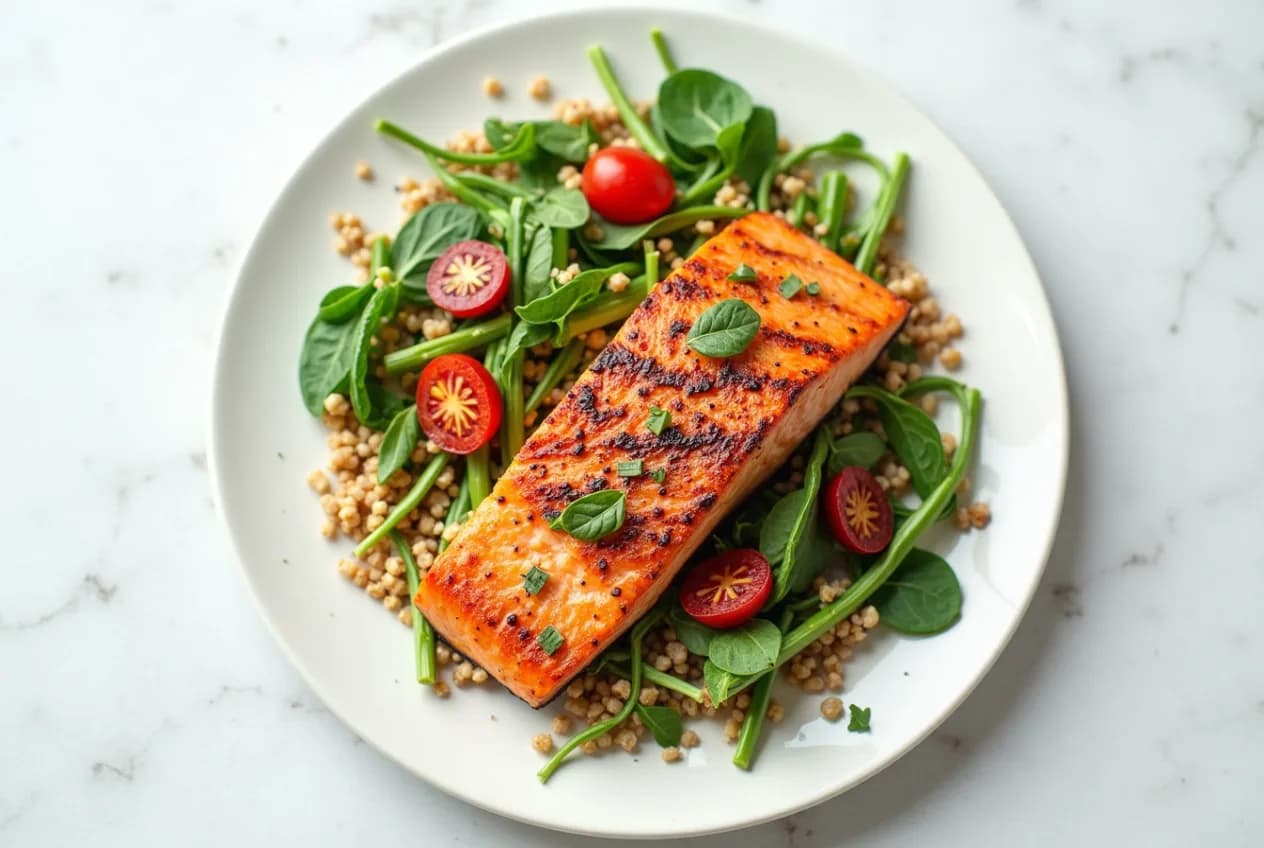
- Fish, especially oily fish, a couple of times a week.
- Less red and processed meat, salt, added sugar, refined carbohydrates and ultra-processed packaged foods.
This is the same pattern we cover for midlife in the best diet for menopause guide — heart-friendly and menopause-friendly choices are mostly the same choices.
Eat more / eat less: a practical table
You don't need to memorize a meal plan. Most of the benefit comes from shifting the balance of what's on your plate, and small swaps you can keep up beat a strict plan you abandon in a month.
| Eat more | Eat less |
|---|---|
| Vegetables and fruit (fresh, frozen, canned without added salt/sugar) | Sugary drinks, sweets and desserts |
| Whole grains: oats, brown rice, whole-grain bread, barley, quinoa | Refined carbs: white bread, white rice, pastries |
| Beans, lentils, chickpeas, tofu | Processed meats: bacon, sausage, deli meats |
| Nuts, seeds and extra-virgin olive oil | Butter, lard, palm and coconut oil, fried foods |
| Fish, especially oily fish (salmon, sardines, mackerel) | Excess red meat |
| Herbs, spices, garlic, lemon for flavor | Added salt and high-sodium packaged foods |
| Water, unsweetened tea or coffee | Most ultra-processed snacks and ready meals |
Specific heart helpers — and what they do
Soluble fiber and oats for cholesterol
Soluble fiber binds cholesterol in the gut so less is absorbed, which can modestly lower LDL ("bad") cholesterol. Good sources include oats and oat bran, barley, beans, lentils, apples, pears and citrus. This is one of the simplest food-first steps in our guide on how to lower cholesterol, and it pairs well with the broader picture in high cholesterol in women.
Oily fish and omega-3s
Oily fish — salmon, sardines, mackerel, trout, herring — supply omega-3 fats linked to better heart health. Most guidelines suggest fish about twice a week. Plant sources of omega-3 (walnuts, flaxseed, chia) help too. Fish-oil supplements aren't routinely recommended for everyone; ask a clinician before starting one, especially if you take blood thinners.
Potassium-rich foods and less salt for blood pressure
Cutting back on salt while eating more potassium-rich foods — leafy greens, beans, potatoes, bananas, tomatoes, yogurt — supports healthier blood pressure. This is the heart of the DASH pattern and a cornerstone of managing high blood pressure in women. If you have kidney disease, don't increase potassium without medical advice — your needs may be different.
No single food saves your heart
It's tempting to chase a magic ingredient — dark chocolate, red wine, a trendy berry. But the research points to the whole pattern and consistency, not any one food. A salmon dinner doesn't undo a week of ultra-processed meals, and a "superfood" smoothie won't offset daily smoking. Food also works best alongside the other basics:
- Move regularly — diet and activity reinforce each other; see the science-backed benefits of exercise.
- Don't smoke, and limit alcohol.
- Aim for a weight that's healthy for you, recognizing that midlife weight changes are common.
Why this matters more in midlife and menopause
Heart disease is the leading cause of death in women, and risk rises around menopause as estrogen falls — cholesterol and blood pressure often drift upward, and fat tends to shift toward the abdomen. A heart-healthy diet is one of the most powerful levers you control during this window. We go deeper in menopause and heart health. Note: hormone therapy is not recommended to prevent heart disease, and its timing and risks are individualized — that's a conversation for your clinician, not a heart-protection strategy on its own.
Smart targets, used as guidance not a prescription
Numbers help you track progress, but targets are individualized and depend on your overall risk. Use these general adult reference points as a rough guide, and let your clinician set yours:
| Measure | General guidance (adults) |
|---|---|
| Saturated fat | Keep to a small share of daily calories; swap for olive oil, nuts, fish |
| Sodium (salt) | Most adults benefit from less; many guidelines suggest aiming under ~2,300 mg/day |
| Added sugar | Limit sugary drinks and sweets; the less the better |
| Fiber | Most people fall short — more plants and whole grains helps |
Diet is first-line and genuinely powerful, but it does not always replace needed medication. Some people reach their goals with food and activity; others also need statins or blood-pressure drugs — a clinician decision based on your full risk picture, not something to start or stop on your own.
Know the warning signs — especially in women
A heart-healthy diet lowers risk over time; it doesn't make you immune. Learn the signs of a heart attack — and don't assume that being a woman means you won't have chest pain. Chest pain or pressure is still the most common heart-attack symptom in women, just as it is in men. What's different is that women are more likely to also have other symptoms that get brushed off — pain in the jaw, neck, back or arm, nausea, unusual or sudden fatigue, lightheadedness, or breathlessness. Never talk yourself out of chest discomfort because it "doesn't feel dramatic enough." Read more in heart disease symptoms in women.
When to seek medical care
Call emergency services (911) right away — don't wait or drive yourself — for chest pain or pressure, pain spreading to the arm, jaw or back, shortness of breath, a cold sweat, nausea, or sudden severe fatigue. These can signal a heart attack. In women, chest pain is still the most common sign, but it often comes alongside quieter symptoms that are easy to dismiss — so when in doubt, treat it as an emergency.
Outside an emergency, talk with a clinician or registered dietitian before making big dietary changes — especially if you have heart disease, diabetes, kidney problems, or take medications that interact with diet (such as warfarin or some blood-pressure drugs). They can personalize your plan, set your individual cholesterol and blood-pressure targets, and tell you whether food and activity alone are enough or whether medication is also needed. A heart-healthy diet supports your treatment — it works with your care team, not instead of it.
Related: Wondering about fish oil? Omega-3 (Fish Oil) for Women: Benefits and How Much You Need gives an honest look at where the heart evidence is strong and where it isn't.