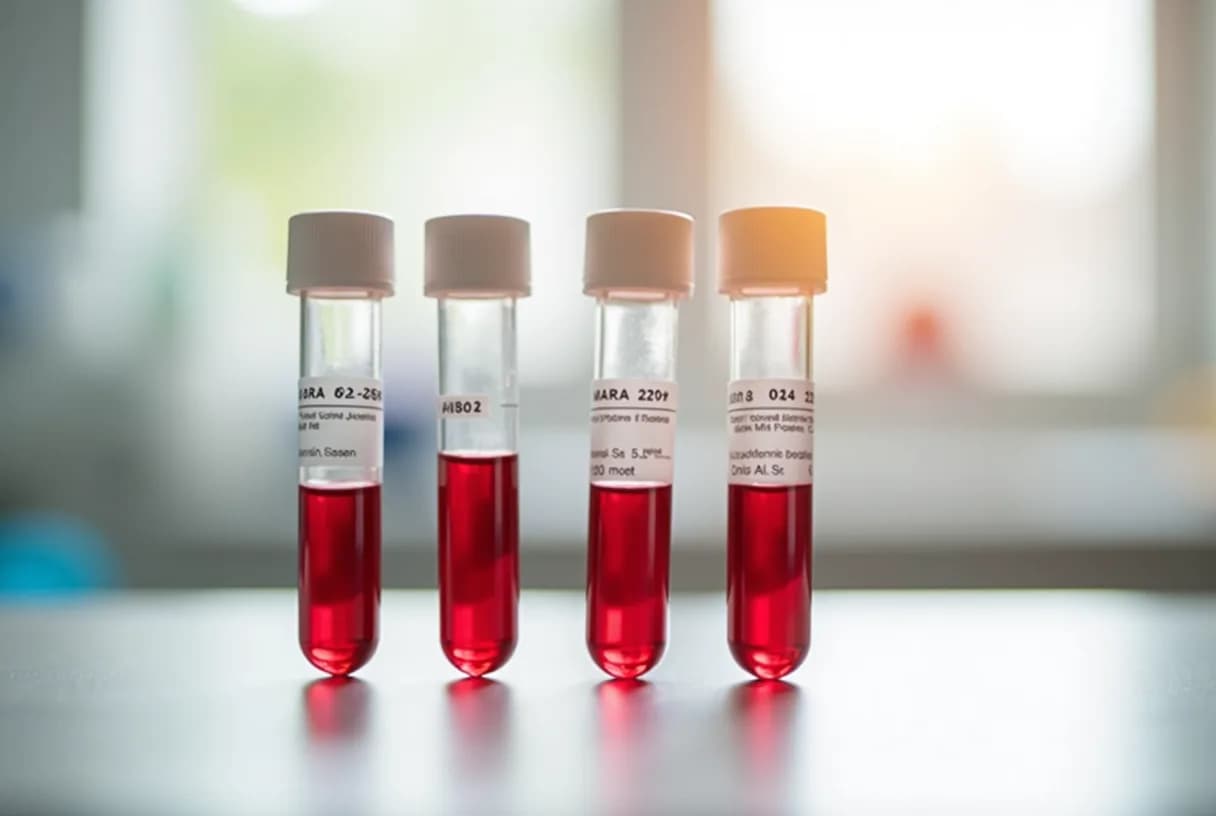
Why the same lab result means something different after menopause
A ferritin of 12 in a 38-year-old with heavy periods and a ferritin of 12 in a 62-year-old are the same number with entirely different meaning. In the first case there is an obvious, ongoing, physiological explanation. In the second, roughly 1–2 mg of iron leaves the body each day through shed cells and there is no menstrual drain — so the body should be holding its stores. Deficiency implies either that iron is not being absorbed, or that blood is going somewhere it shouldn't.
This is why the same finding triggers a different pathway. The American Gastroenterological Association's 2020 guideline makes a strong recommendation, based on moderate-quality evidence, that asymptomatic postmenopausal women and men with iron-deficiency anemia undergo bidirectional endoscopy — upper endoscopy and colonoscopy, ideally at the same sitting. The British Society of Gastroenterology's 2021 guideline says the same thing in different words: in men and postmenopausal women with newly diagnosed iron-deficiency anemia, gastroscopy and colonoscopy should generally be the first-line investigations.
The reason is arithmetic, not alarmism. In the BSG guideline's summary of the evidence, approximately 8–10% of iron-deficiency anemia investigations reveal a malignancy — colorectal cancer most often, sometimes gastric or oesophageal. Put the other way round: about 90% do not. But a right-sided colon tumour can bleed for a year without producing any visible blood in the stool, and anemia may be the only signal it ever sends. That is the whole point of looking.
What usually turns out to be the cause?
Most findings are ordinary. Peptic ulcers and erosive gastritis, often linked to Helicobacter pylori or to long-term NSAID and aspirin use, are common. Celiac disease shows up in roughly 3–5% of iron-deficiency anemia cases and can present with anemia and nothing else — no diarrhoea, no weight loss. Angiodysplasia (fragile little vessel malformations in the bowel wall) becomes more common with age. Bleeding haemorrhoids and diverticular disease account for a share, though clinicians are taught to be cautious about blaming them and stopping there.
Absorption problems matter too. Atrophic gastritis, previous bariatric surgery, and long-term acid-suppressing medication all reduce how much dietary iron the gut can take up, because iron needs stomach acid to be absorbed efficiently. None of these are things to change on your own — if a medication may be contributing, that is a conversation with the prescriber who started it.
Not all anemia after menopause is iron deficiency
Anemia becomes more common with age, but "common" is not the same as "normal," and older adults with anemia usually have an identifiable reason. Iron deficiency is only one branch:
- Vitamin B12 deficiency — classically produces large red cells rather than small ones. Atrophic gastritis, pernicious anemia, long-term metformin, and acid suppression all raise the risk with age. See vitamin B12 deficiency.
- Anemia of chronic disease / inflammation — rheumatoid arthritis, inflammatory bowel disease, chronic infection. Ferritin is an acute-phase protein, so inflammation pushes it up and can hide coexisting iron deficiency.
- Chronic kidney disease — falling erythropoietin production means fewer red cells are made.
- Bone marrow and blood disorders — less common, but the reason an unexplained anemia that doesn't fit any pattern gets referred to haematology.
Two branches can be true at once. Someone can have both iron deficiency and B12 deficiency, in which case the red cells may look deceptively normal in size — one problem cancelling out the other on paper.
Reading the labs: what each number is actually telling you
These are reference points, not diagnoses. Reference ranges differ between laboratories, a single reading can be off, and the pattern across tests matters more than any one value. Your clinician interprets them alongside your history and medications.
| Finding | What it may mean | Typical next step |
|---|---|---|
| Haemoglobin below the lab's lower limit (WHO uses under 120 g/L, i.e. 12 g/dL, in non-pregnant women) | Anemia is present; severity and how fast it developed guide urgency | Iron studies, B12, folate, kidney function, inflammatory markers |
| Ferritin under 30 µg/L | Low body iron stores; under 15 µg/L is close to conclusive for empty stores | Confirms iron deficiency — the search for a cause begins |
| Ferritin 30–45 µg/L with anemia | AGA advises using 45 ng/mL rather than 15 as the diagnostic cutoff in anemic patients, because stores can be depleted at higher-looking numbers | Still treated as iron deficiency; investigate |
| Ferritin normal or high plus low transferrin saturation (around 20% or below) | Inflammation may be masking real iron deficiency | Full iron studies; assess for inflammatory or chronic disease |
| Small red cells (low MCV) | Points toward iron deficiency or a thalassaemia trait | Iron studies; haemoglobin analysis if iron studies are normal |
| Large red cells (high MCV) | Points toward B12 or folate deficiency, thyroid disease, alcohol, or medication effects | B12, folate, thyroid function |
| Positive celiac serology | Celiac disease is a recognised cause of iron deficiency without gut symptoms | Small-bowel biopsy to confirm |
| Blood in the urine on urinalysis | Renal tract source, including renal cell carcinoma — BSG advises urinalysis for this reason | Urology referral / imaging |
If you want help making sense of the printout, our lab results explainer walks through what each line means, and low ferritin and hemoglobin levels go deeper on the two numbers that do most of the work here.
Why taking iron before finding the cause can backfire
This is the part that gets missed. Iron supplements can raise haemoglobin and refill ferritin regardless of why the iron was lost. A normalised blood count feels like the problem is solved — and if the cause was a slow-bleeding tumour or ulcer, the one reliable warning signal has just been switched off. The bleeding continues; the alarm no longer sounds.
This does not mean iron is wrong. In many cases clinicians start iron replacement and investigate in parallel, and the AGA's guidance reflects that logic: after a negative bidirectional endoscopy in an uncomplicated, asymptomatic patient, it suggests a trial of iron rather than jumping straight to video capsule endoscopy. The problem is iron instead of investigation. If you have been taking an over-the-counter iron supplement for tiredness and were never told why your iron was low, tell your clinician — including how long you've been taking it, because it changes how your results are read. Whether to take iron, in what form, and for how long are prescriber decisions; see iron supplements and iron infusion for how those options differ.
What about vaginal bleeding after menopause?
This is a separate red flag with its own pathway, and it does not wait. Any vaginal bleeding after menopause — a single episode, a spot on the tissue, pink discharge — needs prompt evaluation. A meta-analysis of 129 studies covering 40,790 women found that about 90% of women with endometrial cancer had postmenopausal bleeding, while about 9% of women with postmenopausal bleeding were found to have endometrial cancer (Clarke et al., JAMA Internal Medicine, 2018). Nine percent means the great majority of causes are benign — atrophy of the vaginal and endometrial lining is the most common by far — but it also means this is one of the highest-yield symptoms in women's health.
The advice here changed recently, and it is worth knowing which version you are being given. For years, clinicians followed ACOG's 2018 committee opinion, under which a transvaginal ultrasound showing an endometrial lining of 4 mm or less was treated as reassurance enough on its own. In April 2026 ACOG replaced that guidance, because ultrasound alone misses an estimated 5–12% of cancers at initial evaluation — a sensitivity the college judged unacceptably low. The updated advice is transvaginal ultrasound plus endometrial tissue sampling for most women with postmenopausal bleeding. Ultrasound without a biopsy remains reasonable for selected women: a single bleeding episode, a fully visualised lining no thicker than 4 mm, no strong risk factors for endometrial cancer, ready access to gynaecology, and clear counselling that any further bleeding means immediate re-evaluation. Practically: if you were reassured by a thin-lining scan alone and the bleeding came back, that is a reason to be seen again rather than to wait. Read postmenopausal bleeding and endometrial cancer signs next. Note that bleeding on hormone therapy has its own expected patterns — but "expected" is a judgement for your clinician to make, not one to make at home.
Where the evidence is genuinely less settled
Being honest about this matters. A few things are not as firm as guideline language can make them sound:
- The exact ferritin cutoff is contested. AGA argues for 45 ng/mL, BSG notes 30 µg/L as indicating low stores and 15 µg/L as highly specific for empty stores. These reflect different trade-offs between missing cases and over-investigating, not a settled biological truth.
- Iron deficiency without anemia is a grey zone. The strong endoscopy recommendation applies to iron deficiency with anemia. What to do about low ferritin and a normal haemoglobin after menopause is less well defined and is decided case by case.
- Thresholds move. The 4 mm endometrial cutoff is a live example: a number quoted for years as carrying a very high negative predictive value was revised in 2026 once the misses were counted properly. A widely repeated figure is not the same as a permanent one, and older articles and printed patient leaflets can lag the guidance by years.
- Guidelines are not always followed. Audits repeatedly find that a substantial share of patients who meet criteria for GI evaluation never get referred — one practical reason to ask directly what the plan is.
Separately: colorectal cancer screening and this evaluation are not the same thing. The USPSTF recommends routine screening for average-risk adults aged 45–75. Iron-deficiency anemia is a symptom, not average risk — a recent normal screening colonoscopy is reassuring but does not automatically close the question, and a stool test is not a substitute for the diagnostic workup.
When to see a doctor
Seek emergency care now (call 911 in the US) if you have: vomiting blood or material that looks like coffee grounds; black, tarry stools; large amounts of visible blood from the rectum; chest pain, fainting, or breathlessness at rest. Severe anemia can mimic and unmask heart problems, and these signs mean active or heavy blood loss.
Contact your clinician promptly — days, not months — if:
- You have any vaginal bleeding or spotting after menopause.
- A blood test shows new anemia or low ferritin and nobody has explained why.
- You have been told you're anemic and were given iron without any discussion of the cause.
- You have a change in bowel habit, unexplained weight loss, difficulty swallowing, persistent abdominal pain, or a family history of colorectal or gastric cancer.
- You are on long-term NSAIDs, aspirin, or an anticoagulant and your blood count has dropped. Do not stop these on your own — some are preventing strokes or clots. Ask the prescriber.
Reasonable questions to ask: What is causing my iron deficiency? Do I meet the criteria for upper endoscopy and colonoscopy? Have I been checked for celiac disease and H. pylori? Should my urine be tested? If we're starting iron, how will we still track whether the underlying cause is resolved?
Anemia after menopause is not a verdict. It is a question the body has asked, and it usually has a manageable answer — but only if someone goes looking. More on the full picture in our iron and anemia hub and on iron deficiency in women.
This article is health information, not medical advice, and is not a substitute for evaluation by a clinician who knows your history. It does not recommend starting, stopping, or changing any medication or supplement.
]]>