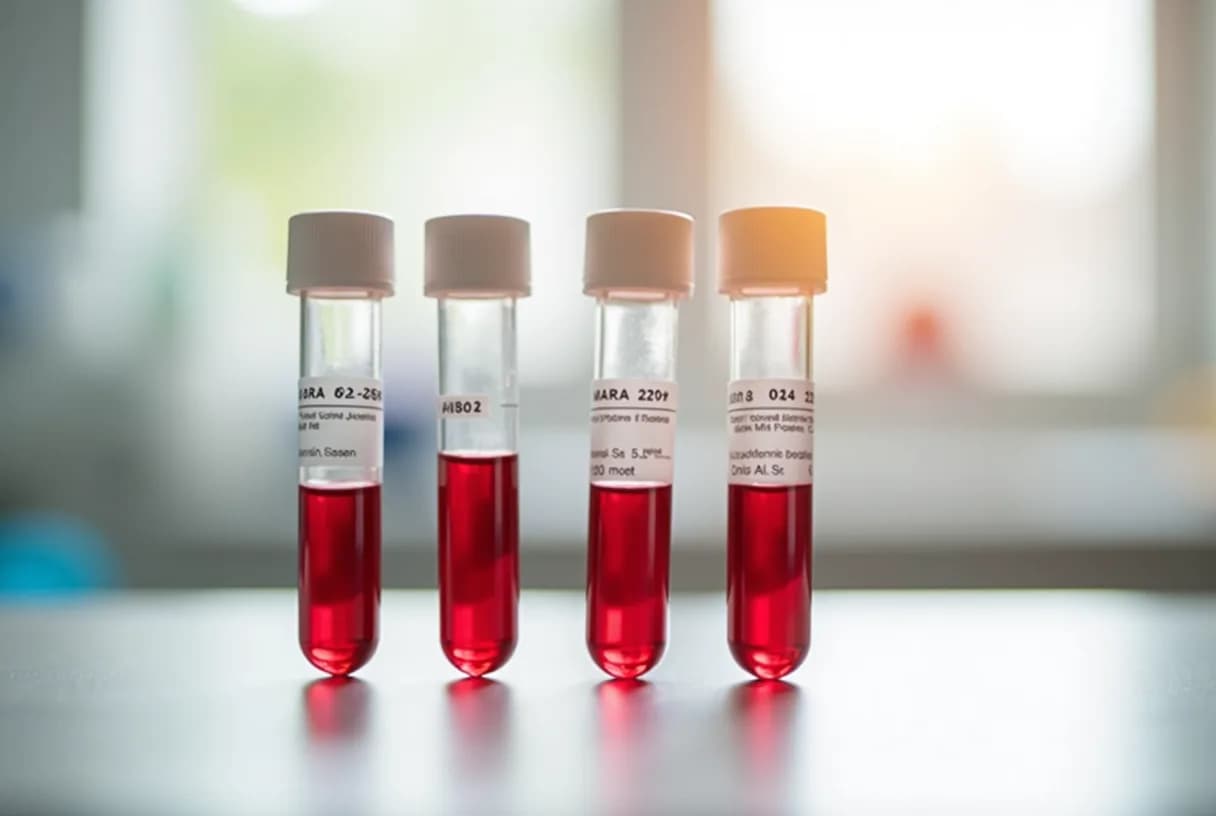
If a blood test has flagged your ferritin as low, or you are wondering whether to ask for the test, this guide explains what the number means in plain language — and why a "normal" result does not always mean your iron is fine.
What is ferritin?
Ferritin is the protein that stores iron inside your cells. When your body has iron to spare, it locks it away as ferritin; when it needs iron, it draws on that reserve. Because the ferritin circulating in your blood reflects how much is in the bank, a ferritin test is widely considered the best single blood marker of your body's iron stores — the deep reserve, not just the iron in transit.
This makes ferritin different from haemoglobin, which measures the iron actually carried in your red blood cells right now. Your stores can run low long before haemoglobin drops, which is exactly why ferritin is so useful.
When is a ferritin blood test done, and what does it show?
A ferritin blood test is usually ordered when someone has symptoms that could point to low iron — most often persistent tiredness — or when a routine blood count hints at a problem. It is a simple blood draw, often run alongside a full blood count and other iron studies.
The result shows where your iron reserves sit on a spectrum:
- Low ferritin — depleted stores, the hallmark of iron deficiency.
- Normal ferritin — adequate stores (with the important caveats below).
- High ferritin — which can mean several different things, from inflammation to iron overload.
What does low ferritin mean?
Low ferritin levels mean your iron stores are depleted — in other words, iron deficiency. This is one of the most common nutritional deficiencies in women, largely because of monthly menstrual blood loss, and it is a major, often-missed cause of feeling exhausted.
Crucially, iron stores empty in stages. You can have a low ferritin and already feel unwell — fatigue, hair thinning, brain fog, breathlessness or restless legs — before your haemoglobin falls far enough to be called iron-deficiency anaemia. This early stage, sometimes called iron deficiency without anaemia, is real and treatable, even though a basic blood count can look normal. For a deeper dive, see our guide to low ferritin.
The honest nuance: reference ranges are debated
Here is where it gets less tidy. Laboratory reference ranges vary from lab to lab, and a "low-normal" ferritin may be labelled normal even in someone who has clear symptoms. Many labs flag ferritin as abnormal only below roughly 15 µg/L, yet a number of clinicians treat symptomatic deficiency at higher thresholds — values in the teens, twenties or even low thirties — particularly in menstruating or very active women.
There is genuine, ongoing debate about where the line should sit, and no single threshold is universally agreed. The practical takeaway: ferritin is interpreted alongside your symptoms and the rest of your blood work, not in isolation. A borderline result in a tired person is worth a conversation, not a shrug.
The important caveat: ferritin and inflammation
Ferritin is not only an iron marker — it is also an acute-phase reactant, meaning it rises in response to inflammation. Infection, inflammatory conditions, recent illness and liver problems can all push ferritin up. The catch is that this can make ferritin read falsely normal or high and hide a genuine deficiency.
So a "normal" ferritin in someone who is unwell or inflamed does not reliably rule out low iron. This is one of the main reasons ferritin should be interpreted by a clinician, who may add other tests (such as transferrin saturation or a marker of inflammation) to see the fuller picture.
What does high ferritin mean?
A high ferritin is less commonly about iron than people assume. It can reflect:
- Inflammation or infection — the most frequent reason for a raised result.
- Liver issues — including fatty liver and other liver disease.
- Iron overload — including the inherited condition haemochromatosis, where the body absorbs too much iron.
- Heavy alcohol use, certain metabolic conditions, and some other causes.
High ferritin always deserves clinical follow-up to find the reason, rather than self-treatment.
Quick results guide
| Ferritin result | What it often suggests | Typical next step |
|---|---|---|
| Low | Depleted iron stores (iron deficiency), with or without anaemia | Find the cause; correct iron via diet and often supplements |
| Low-normal with symptoms | Possible early deficiency; range is debated | Discuss with a clinician; interpret with symptoms and other tests |
| Normal | Usually adequate stores — but can be falsely reassuring if inflamed | Reassess if symptoms persist |
| High | Inflammation, liver issues or iron overload | Clinical investigation to find the cause |
These bands are illustrative, not a diagnosis — your lab's units and reference range, and your clinician's read, are what count.
What to do about low ferritin
The single most important step is to find and treat the cause, then raise iron back up. The cause matters because it changes everything: in a menstruating woman, heavy periods are a common and benign explanation, but iron-deficiency anaemia in a man or a postmenopausal woman should never be assumed to be dietary — it can signal gastrointestinal bleeding and needs investigation.
Once the cause is clear, you and your clinician can rebuild stores by:
- Eating more iron-rich food. See our guide to foods high in iron. Be honest with yourself, though: diet alone is often too slow to fully correct an established deficiency.
- Using iron supplements when advised. Many people need iron supplements to refill stores in a reasonable timeframe — but only after testing, because too much iron is harmful and iron tablets are a serious poisoning risk for children.
- Rechecking ferritin after a course of treatment to confirm stores have recovered.
Iron and the bigger "why am I so tired?" picture
Low iron is one of the most overlooked causes of fatigue in women — but it is not the only one, and the answer is testing, not guessing. Tiredness can also stem from thyroid problems, from menopause and perimenopausal changes, or from chronic stress and burnout. These causes are distinct, but they often coexist — which is exactly why a low ferritin should be interpreted properly rather than treated as the whole story.
When to check in with a clinician
Always interpret a ferritin result with a clinician — and get tested before taking iron, rather than self-diagnosing. Seek medical advice if:
- Your ferritin is low, especially if it is persistently low or has no obvious cause — the reason needs to be found.
- You are a man or a postmenopausal woman with iron deficiency or anaemia — this is a red flag that warrants investigation for bleeding.
- You have heavy periods, blood in your stool, black or tarry stools, unexplained weight loss, or significant tummy pain.
- You feel persistently exhausted, breathless, dizzy, or have chest pain or a racing heart.
- Your ferritin is high, which needs follow-up for inflammation, liver disease or iron overload.
Remember that anaemia has causes beyond iron — including B12 or folate deficiency, chronic disease and blood loss — so an accurate diagnosis, not guesswork, is what gets you better safely.
Related: Want to check your levels at home? At-Home Iron and Ferritin Tests covers what they measure and how to read them.