If you are tired, pale and running on empty, the food on your plate matters more than you might think. Iron deficiency is the most common nutritional deficiency worldwide and is especially common in women, largely because of monthly blood loss, and it is a frequently missed cause of fatigue. This guide covers the foods high in iron worth knowing, how to absorb more of what you eat, and the honest limits of diet alone.
Why iron matters
Your body uses iron to make haemoglobin, the protein in red blood cells that carries oxygen from your lungs to the rest of your body. When iron runs low, you make less haemoglobin and deliver less oxygen to your tissues, which is why low iron shows up as fatigue, breathlessness, dizziness and pale skin. Getting enough iron from food is the foundation of keeping that oxygen-delivery system running.
The two types of dietary iron
Not all dietary iron is equal. There are two forms, and your body handles them very differently.
- Heme iron comes from animal foods such as red meat, liver, poultry, fish and shellfish. It is well absorbed, with your body taking up a relatively high proportion regardless of what else is on the plate. (Learn more in our glossary entry on heme iron.)
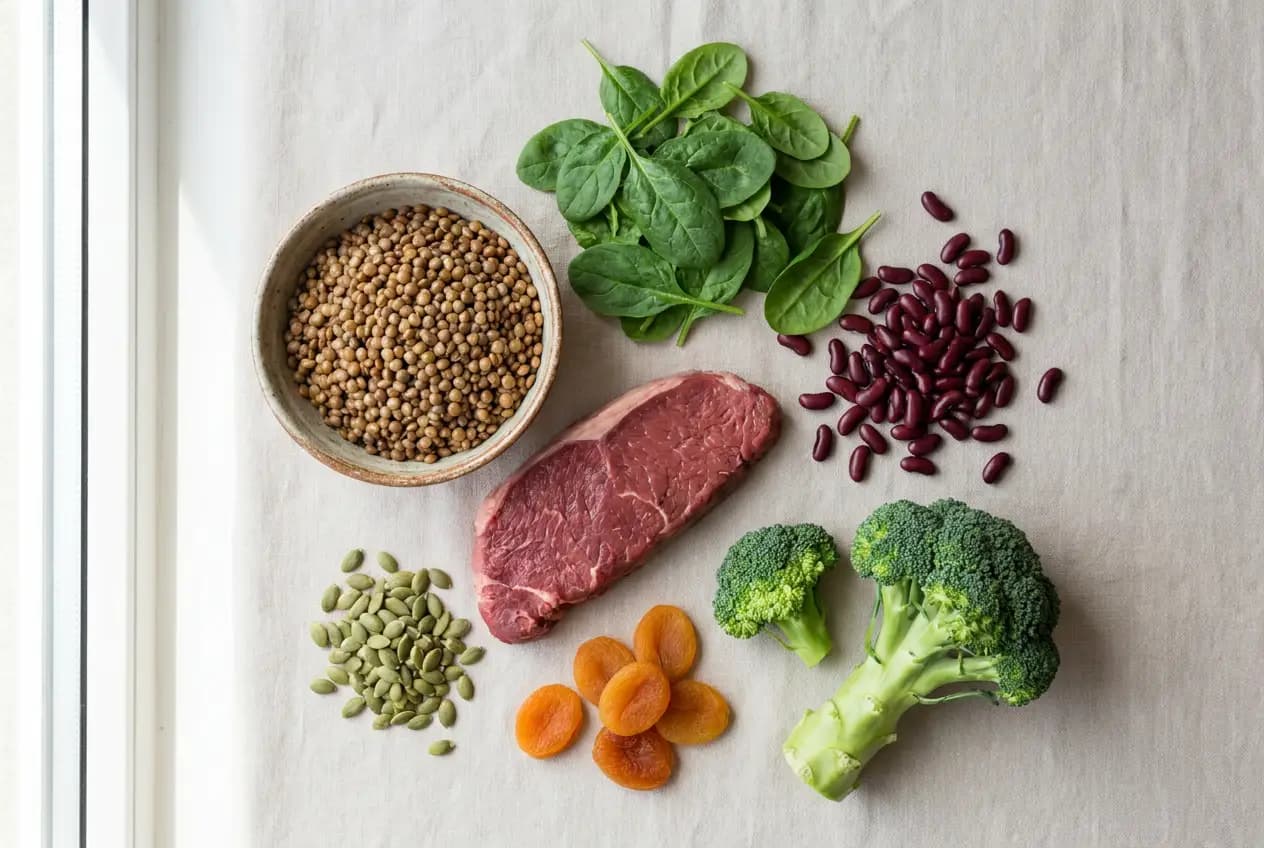
- Non-heme iron comes from plant foods such as lentils, beans, chickpeas, tofu, spinach and other leafy greens, fortified cereals, pumpkin seeds and dried fruit. It is less efficiently absorbed, and uptake rises or falls depending on what you eat alongside it.
Both forms count toward your daily intake. The practical difference is that vegetarians and vegans rely entirely on non-heme iron, so absorption strategy matters far more.
Iron rich foods: a quick comparison table
Here are some of the best iron rich foods in each group. Exact amounts vary by portion, cut and brand, so treat these as a general guide rather than precise figures.
| Heme iron (animal) | Non-heme iron (plant) |
|---|---|
| Liver (beef or chicken) | Cooked lentils |
| Beef and lamb (red meat) | Chickpeas and beans |
| Oysters, clams and mussels | Tofu and tempeh |
| Sardines and other oily fish | Fortified breakfast cereals |
| Turkey and chicken (darker meat) | Pumpkin seeds and cashews |
| Spinach and other leafy greens | |
| Dried apricots, raisins and prunes |
A note on spinach: it is genuinely iron-rich, but it also contains compounds that limit how much of that iron you absorb. It still belongs on the list of foods that matter for women's iron, just do not rely on it alone.
Vegetables rich in iron and other plant sources
Plenty of plant foods deliver meaningful iron, which is reassuring if you eat little or no meat. Useful vegetables rich in iron and plant sources include:
- Legumes: lentils, chickpeas, kidney beans, black beans and edamame.
- Leafy greens: spinach, kale, Swiss chard and broccoli.
- Soy foods: tofu, tempeh and soybeans.
- Seeds and nuts: pumpkin seeds, sesame seeds, cashews and almonds.
- Fortified foods: many breakfast cereals and some plant milks have iron added.
- Dried fruit: apricots, prunes, raisins and figs.
How to boost iron absorption
What you pair with iron-rich foods can make a real difference, especially for non-heme iron.
Pair non-heme iron with vitamin C
Vitamin C significantly improves absorption of plant iron. Add a source of it to iron-rich meals, for example:
- Citrus fruit such as oranges, or a squeeze of lemon over lentils or greens.
- Bell peppers, tomatoes, broccoli and strawberries.
- A glass of orange juice alongside fortified cereal.
Watch what blocks absorption
Some everyday foods and drinks reduce how much iron you take up when eaten at the same meal:
- Tea and coffee: the tannins they contain blunt iron absorption, so keep them between meals rather than with them.
- Calcium and dairy: large amounts at the same time can interfere with iron uptake.
- Very high-fibre foods: in large quantities at one sitting, these can also reduce absorption.
You do not need to fear these foods. The simple fix is timing: enjoy your cup of tea an hour or so away from your most iron-rich meal.
Strategies for vegetarians and vegans
You can absolutely meet your iron needs on a plant-based diet, but it takes a little planning because all your iron is the less-absorbable non-heme form. Helpful habits include:
- Build meals around legumes, tofu, fortified cereals and seeds.
- Add a vitamin C source to every iron-containing meal.
- Move tea, coffee and big dairy servings away from your main iron meals.
- Vary your sources so you are not leaning on a single food.
These principles fit neatly into broader eating patterns we cover in our Mediterranean diet beginner's guide and our overview of the best diet for menopause, both of which are rich in legumes, greens and colourful vegetables.
When food alone is not enough
Here is the honest part. Iron-rich foods are excellent for maintaining healthy levels and preventing deficiency, but once a deficiency is established, food alone often cannot raise your stores quickly enough on its own. This is especially true if you have ongoing losses, such as heavy periods.
It also helps to understand that iron deficiency develops in stages. Your iron stores fall first, which shows up as a low ferritin, and you can already feel symptoms like fatigue at this point, before your haemoglobin drops far enough to count as frank anaemia. In other words, you can be iron-deficient and symptomatic while a routine full blood count still looks "normal" — which is exactly why ferritin, not just haemoglobin, is worth checking.
That is why two steps come first:
- Confirm a deficiency with testing. Do not guess. A blood test, including ferritin, shows whether your iron stores are genuinely low. See our guide to low ferritin for what the numbers mean. One caveat: ferritin is also an inflammation marker, so it can read falsely normal or high with infection, inflammation or liver disease and mask a true deficiency, which is why results need clinical interpretation.
- Use supplements when needed. For a diagnosed deficiency, your clinician may recommend iron supplements alongside dietary changes, because they deliver a far larger, more reliable dose than food.
If you are prescribed iron, a few practical points help. Tablets commonly cause side effects such as constipation, nausea, stomach upset and dark stools. The same things that block iron from food also blunt absorption from a tablet, so take it away from tea, coffee, dairy and calcium supplements, and a vitamin C source can help. Emerging evidence suggests that a single daily dose, or even alternate-day dosing, may be absorbed more efficiently and tolerated better than several doses a day, so follow your clinician's specific instructions.
Crucially, do not start iron supplements on your own. Too much iron is harmful, iron overload is a real risk in conditions such as haemochromatosis, and iron tablets are a serious poisoning hazard for children. Never megadose iron-fortified products without advice.
Iron, fatigue and the bigger picture
Persistent tiredness is one of the main symptoms of low iron, but iron is only one piece of the fatigue puzzle. Several distinct causes can look alike, and they sometimes coexist:
- Iron: see our guides to iron deficiency symptoms and iron-deficiency anaemia.
- Thyroid: an underactive thyroid is a classic cause of thyroid-related fatigue.
- Menopause: hormonal change drives its own menopause fatigue.
- Stress: chronic stress and what is loosely called adrenal fatigue can drain energy too.
The answer is testing, not guessing. Sorting out which factor, or combination, is at play is the fastest route to feeling like yourself again.
When to get medical advice
Food is a sensible first line of defence, but some situations need professional input. Speak to a clinician if you:
- Have ongoing fatigue, breathlessness, dizziness, pale skin, brittle nails or unusual cravings (such as ice).
- Have heavy periods that may be driving iron loss.
- Want to take iron supplements, so a deficiency can be confirmed and the dose tailored.
Important red flag: iron-deficiency anaemia in a man, or in a woman who has gone through menopause, should never be assumed to be dietary. It can signal bleeding in the gut and needs proper investigation. Remember too that anaemia has causes beyond iron, including B12 or folate deficiency, chronic disease and other blood loss, so an accurate diagnosis matters. This article is general information, not a substitute for personalised medical advice.