All articles
547 evidence-based articles, checked against primary sources.
Menopause
Testosterone Therapy for Women: Evidence, Uses, and Risks
Testosterone therapy for women has exactly one use supported by good evidence: low sexual desire that causes distress after menopause. It is off-label in most countries, there is no FDA-approved female product in the US, and dosing must be clinician-managed. It is not proven for energy, mood, or anti-aging.
July 4, 2026 6 min

Menopause
Menopause and Brain Health: Memory, Focus, and Dementia Risk
Many women notice foggy memory and slower recall around menopause. Most of it is a temporary perimenopausal dip that improves. Here is the honest evidence on hormones, cognition, and long-term brain health — and the habits that actually help.
July 4, 2026 6 min

Vaginal Health
Genitourinary Syndrome of Menopause (GSM): Symptoms and Treatment
Genitourinary syndrome of menopause (GSM), once called vaginal atrophy, causes dryness, burning, painful sex, and urinary symptoms as estrogen falls. It is common, tends to progress without treatment, and responds well to a stepwise approach — here is what GSM is and how it is managed.
July 4, 2026 5 min

Menopause
Muscle Loss After Menopause: Sarcopenia and How to Fight It
Muscle loss accelerates around menopause as estrogen falls and aging adds up. Here is what sarcopenia is, why it matters, and the four tools that actually work: resistance training, enough protein, vitamin D and daily movement.
July 4, 2026 6 min
Weight & Metabolism
Wegovy vs Ozempic: Same Drug, Different Purpose
Wegovy and Ozempic contain the identical active ingredient, semaglutide, yet they carry separate FDA approvals, dosing ranges, and insurance rules. Understanding why matters more than most searchers realize.
July 4, 2026 6 min

Menopause
Bioidentical Hormones: What They Are, and Are They Safer?
The word "bioidentical" gets used to sell custom-compounded hormones as safer and more natural — but many standard, FDA-approved menopause hormones are already bioidentical. We explain the difference that actually matters for your safety.
July 4, 2026 5 min

Menopause
The Menopause Symptoms Women Are Really Googling (2026 Search Report)
A data report on what midlife women actually search about menopause. Hot flashes dominate, but the symptoms most people don't realize are hormonal — hair loss, weight gain, brain fog — draw enormous curiosity too.
July 4, 2026 4 min

Thyroid Health
At-Home Thyroid Tests: How They Work and What to Watch For
At-home thyroid tests use a finger-prick blood sample to measure markers like TSH, free T4, free T3, and TPO antibodies. Here is what each one means, how reliable the results are, why biotin can distort them, and why a clinician still needs to interpret the numbers.
July 4, 2026 6 min
Menopause
At-Home Hormone Tests for Women: What They Can and Can't Tell You
At-home hormone kits promise clarity about menopause, energy, and "hormone balance." Here's what estradiol, FSH, progesterone, testosterone, thyroid, and cortisol tests can genuinely tell you, where they mislead, and when a clinician-ordered test is the right call.
July 4, 2026 6 min
Supplements
At-Home Vitamin D Tests: Are They Worth It?
A plain-English guide to how at-home vitamin D tests work, who should consider one, how accurate they are versus a lab, and the honest limits — including why deficiency correction belongs with a clinician.
July 4, 2026 6 min

Menopause
Menopause Apps: What They Do and How to Choose One
A plain-English, non-affiliate guide to what menopause apps do — symptom and cycle tracking, education, community, and clinician links — plus how to weigh privacy, evidence, cost, and their honest limits.
July 4, 2026 5 min

Menopause
How to Choose Online Menopause Care: A Practical Guide
A non-endorsement guide to choosing online menopause care: what these services offer, the signs of legitimate clinical care, the red flags to avoid, and why in-person care still matters.
July 4, 2026 5 min

Menopause
At-Home Menopause (FSH) Tests: Do They Actually Work?
At-home menopause tests measure FSH in urine or blood, but FSH swings wildly in perimenopause, so a single result cannot reliably confirm menopause. We explain what these kits do, their real limits, when a clinician might still test, and the symptom-and-cycle picture that matters more.
July 4, 2026 6 min

Nutrition & Diet
At-Home Food Sensitivity Tests: What the Science Really Says
At-home IgG food sensitivity tests are popular but not validated to diagnose intolerance. Learn what they really measure, why leading allergy organizations advise against them, and the evidence-based path to identifying trigger foods.
July 4, 2026 5 min
Iron & Anemia
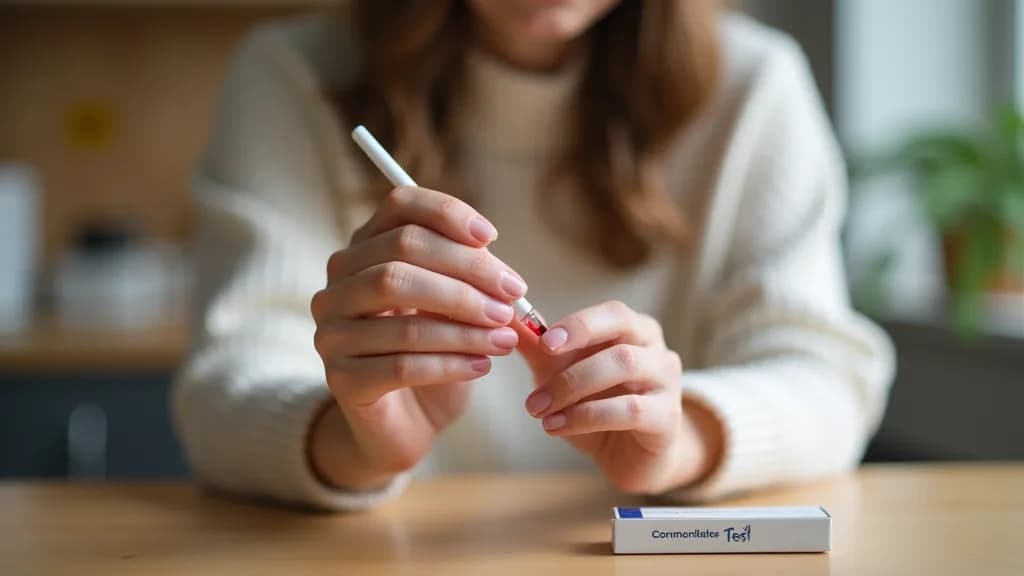
At-Home Iron and Ferritin Tests: A Practical Guide for Women
At-home iron tests use a finger-prick sample to estimate ferritin, your iron stores, plus markers like hemoglobin. They can flag low iron early, but ferritin rises with inflammation and can hide a true deficiency, so results always need a clinician's read.
July 4, 2026 6 min

Fitness
Strength Training for Women: Why It Matters and How to Start
Why strength training is essential for women, especially around menopause, and a simple beginner plan using bodyweight, bands, or weights, twice a week.
July 3, 2026 6 min

Mental Health
How to Manage Stress: Evidence-Based Techniques That Work
Stress is unavoidable, but chronic stress is manageable. Here are the techniques with real evidence behind them, why they work, and when persistent stress means it is time to get help.
July 3, 2026 5 min

Sleep
Sleep Apnea in Women: The Overlooked Symptoms
Sleep apnea is often pictured as a loud-snoring man's problem, so women with fatigue, insomnia, morning headaches, or low mood are frequently missed. Here is how the condition shows up differently in women, why menopause raises the risk, and when to seek a proper sleep evaluation.
July 3, 2026 6 min